Summary

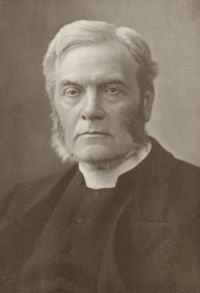
Portrait of Marcus Dods Marcus Dods The Expositor's Bible: The Gospel of St…

Are we to close the Gospel and shut away from us this great revelation of Divine love as a thing in which we claim no personal share? This exhibition of all that is tender and pure, touching and hopeful, in human life—are we to look at it and pass on as if we had been admiring a picture and not looking into the very heart of all that is eternally real? This accessibility of God, this sympathy with our human lot, this undertaking of our burdens, this bidding us be of good cheer—is it all to pass by us as needless for us?
Source: Gutenberg

Portrait of Marcus Dods Marcus Dods The Expositor's Bible: The Gospel of St…

His happiness is present; his reward is that he may be allowed to express his love, to feed it, to gratify it by giving and labouring and sacrificing. In a word, he finds in love eternal life—life that is full of joy, that kindles and enlivens his whole nature, that carries him out of himself and makes him capable of all good.
This truth, then, that whatever a man does from love is its own reward, is the solution of the question whether virtue is its own reward. Virtue is its own reward when it is inspired by love. Life is its own reward when love is the principle of it.
Source: Gutenberg

Portrait of Marcus Dods Marcus Dods The Expositor's Bible: The Gospel of St…

A mist rises from sin that obscures the clear outline between its own domain and that of righteousness, like the mist that rises from the sea and mingles shore and water in one undefined cloud. But let it rise off the one and the other is at once distinctly marked out; and so in the conviction of sin there is already involved the conviction of righteousness. The blush of shame that suffuses the face of the sinner as the mist-dispelling Sun of righteousness arises upon him is the morning flush and promise of an everlasting day of righteous living.
Source: Gutenberg

Get perspective with Kwize: daily news enlightened by great literature