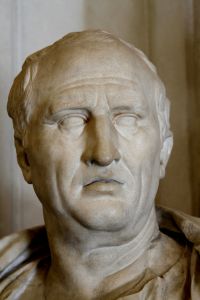
Marcus Tullius Cicero

Marcus Tullius Cicero

Summary

Portrait of Marcus Tullius Cicero Marcus Tullius Cicero Against Verres — First pleading

The very criminal who the day before thought that he was already condemned, is acquitted now that his defender has been made consul. What are we to think then? Will it avail nothing that all Sicily, all the Sicilians, that all the merchants who have business in that country, that all public and private documents are now at Rome? Nothing, if the consul elect wills it otherwise. What! will not the judges be influenced by the accusation, by the evidence, by the universal opinion of the Roman people? No. Everything will be governed by the power and authority of one man.
Source: Wikisource

Portrait of Marcus Tullius Cicero Marcus Tullius Cicero Against Verres — First pleading

I warn you, I give notice to you, of what I am well assured, that this most seasonable opportunity has been given to you by the favour of the gods, for the purpose of delivering your whole order from hatred, from unpopularity, from infamy, and from disgrace. There is no severity believed to exist ill the tribunals, nor any scruples with regard to religion; in short, there are not believed to be any tribunals at all. Therefore we are despised and scorned by the Roman people; we are branded with a heavy and now a long standing infamy.
Source: Wikisource

Portrait of Marcus Tullius Cicero Marcus Tullius Cicero Against Verres — First pleading

But no, since all this dominion and sovereignty of yours over the courts of justice delights you so much, and since there are some men who are neither ashamed of their licentiousness and their infamy, nor weary of it, and who, as if on purpose, seem to wish to encounter hatred and unpopularity from the Roman people, I profess that I have undertaken this,—a great burden perhaps, and one dangerous to myself, but still worthy of my applying myself to it with all the vigour of my age, and all diligence.
Source: Wikisource

Get perspective with Kwize: daily news enlightened by great literature