Summary

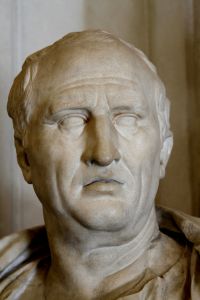
Portrait of Marcus Tullius Cicero Marcus Tullius Cicero Against Verres — Second pleading…

On the territory of the Mamertines, connected with us by treaty, at peace with us, is that monument of your cruelty raised. Is not your city the only one where, when any one arrives at it from Italy, he sees the cross of a Roman citizen before he sees any friend of the Roman people? which you are in the habit of displaying to the people of Rhegium, whose city you envy, and to your inhabitants, Roman citizens as they are, to make them think less of themselves, and be less inclined to despise you, when they see the privileges of our citizenship extinguished by such a punishment.
Source: Wikisource

Portrait of Marcus Tullius Cicero Marcus Tullius Cicero Against Verres — Second pleading…

I am able to prove this distinctly, O judges, that no more magnificent doors, none more beautifully wrought of gold and ivory, ever existed in an, temple. It is incredible how many Greeks have left written accounts of the beauty of these doors: they, perhaps, may admire and extol them too much; be it so, still it is more honourable for our republic, O judges, that our general, in a time of war, should have left those things which appeared to them so beautiful, than that our praetor should have carried them off in a time of peace.
Source: Wikisource

Portrait of Marcus Tullius Cicero Marcus Tullius Cicero Against Verres — Second pleading…

You, O Publius, can protect the honour of your family renown; you can, you have every advantage which either fortune or nature ever gives to men. I do not wish to anticipate you in gathering the fruit that belongs to you; I am not covetous of the glory which ought to belong to another. It does not correspond to the modesty of my disposition, while Publius Scipio, a most promising young man, is alive and well, to put myself forward as the defender and advocate of the memorials of Publius Scipio.
Source: Wikisource

Get perspective with Kwize: daily news enlightened by great literature