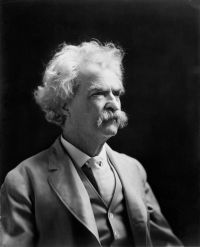
 Mark Twain,
What Is Man? and Other Essays
Mark Twain,
What Is Man? and Other Essays
“ There is no such thing as material covetousness. All covetousness is spiritual. ”
Covetousness, defined as an intense desire for possessions or qualities, has been examined through moral, spiritual, and literary perspectives. Mark Twain views it as a spiritual, rather than material, failing, while Abraham Cowley longs for a simple life dedicated to cultivation.
Charles Ebert Orr broadens its scope to encompass worldly enjoyments, and Patañjali portrays it as a spiritual struggle within yoga. Matthew Henry cautions against its destructive consequences, and Marlowe brands it as a monstrous transgression. These diverse viewpoints highlight covetousness as a multifaceted human weakness, illustrating both individual yearning and wider ethical conflicts.
Mark Twain,
What Is Man? and Other Essays
“ There is no such thing as material covetousness. All covetousness is spiritual. ”
 Abraham Cowley,
Cowley's Essays
Abraham Cowley,
Cowley's Essays
“ I never had any other desire so strong, and so like to covetousness, as that one which I have had always, that I might be master at last of a small house and large garden, with very moderate conveniences joined to them, and there dedicate the remainder of my life only to the culture of them and the study of nature. ”
Charles Ebert Orr, The Gospel Day; Or, the Light of Christianity
“ Covetousness includes more than the love of money. Fame, honor, worldly pleasures, gratification of unholy appetites and passions, may be properly termed covetousness. To entertain for anything an affection that is not a pure and godly affection is idolatry, and idolatry is covetousness. ”
Patañjali, Yoga Sutras (1912)
“ The conquest of covetousness brings this rich fruit, because the root of covetousness is the desire of the individual soul, the will toward manifested life. And where the desire of the individual soul is overcome by the superb, still life of the universal Soul welling up in the heart within, the great secret is discerned, the secret that the individual soul is not an isolated reality, but the ray, the manifest instrument of the Life, which turns it this way and that until the great work is accomplished, the age-long lesson learned. ”
Matthew Henry, Commentary on the Whole Bible… (1700s)
“ While they show much love it is only with the mouth, from the teeth outward, but their heart goes after their covetousness; they are as much set upon the world as ever, as much in love and league with it as ever. Hearing the word is only their diversion and recreation, a pretty amusement now and then for an hour or two. But still their main business is with their farm and merchandise; the bent and bias of their souls are towards them, and their inward thoughts are employed in projects about them. Note, Covetousness is the ruining sin of multitudes that make a great profession of religion ”
Matthew Henry, Matthew Henry's Commentary on the Whole Bible… (1700s)
“ Take heed and beware of covetousness; horate—" Observe yourselves, keep a jealous eye upon your own hearts, lest covetous principles steal into them; and phylassesthe— preserve yourselves, keep a strict band upon your own hearts, lest covetous principles rule and give law in them." Covetousness is a sin which we have need constantly to watch against, and therefore frequently to be warned against. 2. The reason of it, or an argument to enforce this caution: For a man's life consisteth not in the abundance of the things which he possesseth ”
 Jacob Merlo Horstius,
The paradise of the Christian soul
(1877)
Jacob Merlo Horstius,
The paradise of the Christian soul
(1877)
“ But pluck up out of our hearts covetousness, which is the root of all evil, that we may not desire other men’s goods, but give of our own, not with sadness, or of necessity, but with a full hand and a kind heart; and so be beloved by thee as cheerful givers, and receive the kingdom prepared for us from the foundation of the world. ”
 Aesop,
The Fables of Æsop, and Others
Aesop,
The Fables of Æsop, and Others
“ True! people would be in the wrong to paint covetousness in such odious colours, were it compatible with innocence. But here arises the mischief: a covetous man will stop at nothing to attain his ends; and when once avarice takes the field, honesty, charity, humanity, and every virtue which opposes it, are sure to be put to the rout. ”
John Miller, The Workingman's Paradise: An Australian Labour Novel
“ For the first time in his life, he coveted such things with a righteous covetousness, without hating those who had them, recognising without words that to have and to appreciate such a life was to desire ceaselessly to bring it within the reach of every human being. ”
 Ralph Waldo Emerson,
Essays — Second Series
Ralph Waldo Emerson,
Essays — Second Series
“ The covetousness or the malignity which saddens me when I ascribe it to society, is my own. ”
Rev. James Wood, Dictionary of Quotations from Ancient and Modern…
“ Covetous men need money least, yet most affect it; and prodigals, who need it most, do least regard it. Theod. Parker.Covetousness bursts the bag. Pr. 15Covetousness is a sort of mental gluttony, not confined to money, but greedy of honour and feeding on selfishness. Chamfort.Covetousness is ever attended with solicitude and anxiety. B. Franklin.Covetousness is rich, while modesty goes barefoot. Phædrus.Covetousness, like jealousy, when it has once taken root, never leaves a man but with his life. T. Hughes.Covetousness often starves other vices. ”
 Alexis de Tocqueville,
Democracy in America — Volume 2
Alexis de Tocqueville,
Democracy in America — Volume 2
“ He is told of the countless evils caused by pride and covetousness: he is reminded of the necessity of checking his desires, of the finer pleasures which belong to virtue alone, and of the true happiness which attends it. ”
The Mahabharata of Krishna-Dwaipayana Vyasa…
“ When wicked-souled persons under the domination of covetousness apparently practise the duties of righteousness, the consequence that results is that the desecrations committed by them soon become current among men. Pride, anger, arrogance, insensibility, paroxysms of joy and sorrow, and self-importance, all these, O descendant of Kuru, are to be seen in persons swayed by covetousness. Know that they who are always under the influence of covetousness are wicked. I shall now tell thee of those about whom thou askest, viz., those who are called good and whose practices are pure. ”
 Joseph Conrad,
Nostromo: A Tale of the Seaboard
Joseph Conrad,
Nostromo: A Tale of the Seaboard
“ There is no credulity so eager and blind as the credulity of covetousness, which, in its universal extent, measures the moral misery and the intellectual destitution of mankind. ”
Thomas Gordon, Cato's Letter No. 117 — Of the Abuse of Words… (1723)
“ And as thought itself is only a motion of the mind, so one motion must produce another, as every thought must do, and be perpetually progressive, till death puts an end to all thoughts. Here covetousness therefore can only proceed from a poorness and dejection of soul, which always fears want and misery, and must ever be bereft of all lively and sparkling imaginations, be in a constant state of diffidence and despondency, and lose all the gay, cheerful and generous sensations, which flow from a free, active, happy, and beneficent mind. ”
Howard J. Chidley, Fifty-Two Story Talks to Boys and Girls
“ That was, of course, a very foolish way to look at it, but that is the way a great many people look at things. This is what is called covetousness. Covetous people always want something they have not, and so they are usually unhappy. ”
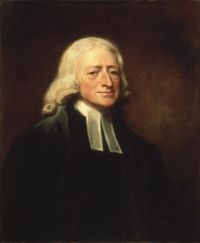 John Wesley,
The works of the Rev. John Wesley…
(1771)
John Wesley,
The works of the Rev. John Wesley…
(1771)
“ Now though some people may live so plausible a life, as to appear chargeable with no other fault than covetousness or ambition; yet the case is not as it appears, for covetousness or ambition cannot subsist in a heart that is in other respects rightly devoted to God. ”
 Brigham Young,
Journal of Discourses — Volume 8…
Brigham Young,
Journal of Discourses — Volume 8…
“ People become covetous. The whole world is more or less covetous; and when the questions are asked, "Where shall we go for wisdom—for strength? To whom shall we apply for knowledge? Where shall we seek for life?"—there is but one source, and that is the God who organized us. ”
 Charles Horton Cooley,
Human nature and the social order
(1902)
Charles Horton Cooley,
Human nature and the social order
(1902)
“ Is it not rather ideal traits or sentiments, fragments of personal experience, phases of past intercourse returning in the imagination with a new emphasis in the presence of new situations? We have at times divined in other people courage, generosity, patience and justice, and judged them to be good. Now, when we find ourselves in a situation where these traits are called for, we are likely to be reminded by that very fact of our previous experience of them; and the memory of it brings these sentiments more vividly to life and gives them more authority in conscience. ”
Matthew Henry, Commentary on the Whole Bible… (1700s)
“ By a covetous man some understand a lewd lascivious libertine, who indulges himself in those vile lusts which were accounted the certain marks of a heathen and an idolater. Others understand it in the common acceptation of the word; and such a man is an idolater because there is spiritual idolatry in the love of this world. As the epicure makes a god of his belly, so the covetous man makes a god of his money, sets those affectations upon it, and places that hope, confidence, and delight, in worldly good, which should be reserved for God only. ”
C. J. Coffman, Manual of the Enumeration
“ For with the feeling of firmness that accompany it you will gain some knowledge of inherent power, and will arouse now any pride or dignity that may be latent in your nature. Feelings of jealousy will also be experienced which will incline to caustic utterances and sarcasm, when vexed or offended, for the gentler side of the nature will be overlaid by this apparently coarser vibration but it is the awakening of the real potency of the nature that will give rise to this change. ”
 Martin Luther,
Lessons in the Small Catechism of Dr…
Martin Luther,
Lessons in the Small Catechism of Dr…
“ Both commandments begin with the words: "Thou shalt not covet." To covet means eagerly and sinfully to desire and want what does not belong to us, but to some one else, to our neighbor. We are covetous when we envy our neighbor because of what he has, and want it for ourselves, and will not be satisfied until we have obtained it for ourselves. ”
 Wilson Armistead,
Tales and Legends of the English Lakes
Wilson Armistead,
Tales and Legends of the English Lakes
“ Am I, alone, of all my race doomed to drag on a long and weary life, a solitary, friendless creature? I have formed my notions of excellence at an elevation to which human nature does not attain; I will banish these vain ideas; lower my scale of excellence, as to the external and less important parts of personal character, and return into the world, determined to be pleased, to imitate the example of my fellowmen, and, like them, to be happy. ”
P. Coffey, Ontology, or the Theory of Being
“ Every such habit inheres immediately in some operative faculty, as science in the intellect, or justice in the will. All natural habits are operative. There is, however, as we know from Divine Revelation, an “entitative” habit, a habitus entitativus, which affects the substance itself of the human soul, ennobling its natural mode of being and so perfecting it as to raise it to a higher or supernatural plane of being, to an order of existence altogether undue to its nature: the supernaturally infused habit of sanctifying grace.332.Eth. ”
“ Thou, who dost men (as nights to colours do) Bring to an equality! Come, thou just God! and equal me Awhile to my disdainful She: In that condition let me lie, Till Love does the favour shew: Love equals all a better way than you. ”
“ Have you, as a member of the human race, any feeling that you share in the advancement of its gentleness, of its sense of beauty and justice—that, in proportion as the human race becomes more lovable and lovely, you too become more lovable and lovely? ”
P. Coffey, Ontology, or the Theory of Being
“ If there be in existence an inscrutable ‘transcendental Ego,’ eternally screened from my ken by this self-asserting ‘empirical Ego,’ I confess I feel very little interest in the nature or the welfare of the former. The only soul about which I care is that which immediately presents itself in its acts, which thinks, wills, remembers, believes, loves, repents, and hopes.”—Maher, op. ”
 Mary Baker Eddy,
Science and Health with Key to the Scriptures
(1906)
Mary Baker Eddy,
Science and Health with Key to the Scriptures
(1906)
“ Tones of the human mind may be different, but they should be Chord and discord concordant in order to blend properly. Unselfish ambition, noble life-motives, and purity, — these constituents of thought, mingling, constitute individually and collectively true happiness, strength, and permanence. ”
 Lydia Sigourney,
Moral Pieces in Prose and Verse
(1815)
Lydia Sigourney,
Moral Pieces in Prose and Verse
(1815)
“ It is supposed by some that its lineaments give spirit and dignity to the character upon particular occasions. But covet not such a spirit, or such a dignity as this. It is an unamiable spirit, a dignity that inspires no true respect; and in cases where energy is requisite, firmness and determination will accomplish more than all the violence of passion. ”
 Dwight Lyman Moody,
Bible Characters
Dwight Lyman Moody,
Bible Characters
“ We may even be covetous of personal appearance; we may be covetous of popular fame, such as is enjoyed by other men; we may be covetous in every direction which implies the gratification of our own wishes ”
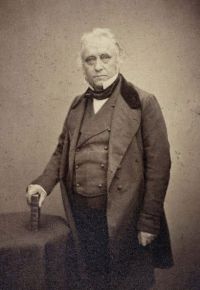 Thomas Babington Macaulay,
The History of England from the Accession of James II…
Thomas Babington Macaulay,
The History of England from the Accession of James II…
“ The chief trick by which clever men kept up the price of their abilities was called integrity. The chief trick by which handsome women kept up the price of their beauty was called modesty. The love of God, the love of country, the love of family, the love of friends, were phrases of the same sort, delicate and convenient synonymes for the love of self. ”
Amelia Gere Mason, The Women of the French Salons
“ I have never seen together so many attractions, so much gaiety, so much coquetry, so much light, so much innocence and virtue. No one ever understood better the art of having grace without affectation, raillery without malice, gaiety without folly, propriety without constraint, and virtue without severity. ”
 Susan Fenimore Cooper,
The rhyme and reason of country life
Susan Fenimore Cooper,
The rhyme and reason of country life
“ Many different elements are blended in the composition of true elegance, and some of these are of a very homely, substantial nature; plain common sense, and even a vein of sterner wisdom are requisite; that moderation which avoids excess is absolutely indispensable; order and harmony of combination are needed; dignity and self-respect are essentials; natural feeling must be there, with all its graceful shades of deference and consideration for the rights and tastes of others; intellectual strength, which has no sympathy with the merely vapid and frivolous, is a matter of course ”
 Hannah More,
Coelebs In Search of a Wife
Hannah More,
Coelebs In Search of a Wife
“ We must conform a little to the world in which we live." Trusting to his extreme good nature, and fired at the scene to which I had been a witness, I ventured to observe that non-conformity to such a world as that of which this lady was a specimen, was the very criterion of the religion taught by Him who had declared by way of pre-eminent distinction, that "his kingdom was not of this world.""You are a young man," answered he mildly, "and this delicacy and these prejudices would soon wear off if you were to live some time in the world." ”
 David Hume,
Treatise of Human Nature/Book 2…
(1739)
David Hume,
Treatise of Human Nature/Book 2…
(1739)
“ The second quality, which I discover in these passions, and which I likewise consider as an original quality, is their sensations, or the peculiar emotions they excite in the soul, and which constitute their very being and essence. ”
 Georg Wilhelm Friedrich Hegel,
The Philosophy of Fine Art, volume 2…
Georg Wilhelm Friedrich Hegel,
The Philosophy of Fine Art, volume 2…
“ In all these three stages of honour, love, and fidelity, we shall find the soil on which the self-subsistency of personality, the soul, is supported, an independence which, however, constantly unfolds in a wider and more affluent content, remaining in the same self-reconciled. ”
P. Coffey, Ontology, or the Theory of Being
“ And we mean by it that the being we describe as good has the powers, qualities, equipments, which fit it for its end or purpose. A being is good whose nature is equipped and adapted for the realization of its natural end or purpose. Thus we see that the notion of goodness is correlative with the notion of an end, towards which, or for which, a being has a natural tendency or desire. ”
Samuel Philips, The Christian Home
“ Can we sympathize and work harmoniously together in mind and heart and will and taste? Are we complemental to each other? These are questions of far greater importance than the question of wealth, of beauty, or of rank. ”
 Randolph Silliman Bourne,
Youth and Life
(1913)
Randolph Silliman Bourne,
Youth and Life
(1913)
“ In the persistence of our own personality, the humble fragment of a divine personality, we get the pattern of its permanence. The Great Companion is ever with us, silently ratifying our worthy deeds and tastes and responses. The satisfactions of our spiritual life, of our judgments and appreciations of morality and art and any kind of excellence, come largely from this subtle corroboration that we feel from some unseen presence wider than ourselves. ”
P. Coffey, Ontology, or the Theory of Being
“ Again, comparing with one another the individual beings that make up our experience, we classify them, we arrange them in a hierarchical order of relative “perfection,” of inferiority or superiority, according to the different grades of reality or perfection which we think we apprehend in them. Thus, we look on living things as a higher, nobler, more perfect order of beings than non-living things, on animal life as a higher form of being than plant life, on intelligence as higher than instinct, on will as superior to sense appetite, on mind or spirit as nobler than matter, and so on. ”
 Evelyn Underhill,
The Life of the Spirit and the Life of To-day
Evelyn Underhill,
The Life of the Spirit and the Life of To-day
“ When we study the character and works of these men and women, observing their nobility, their sweetness, their power of endurance, their outflowing love, we must, unless we be utterly insensitive, perceive ourselves to be confronted by a quality of being which we do not possess. ”