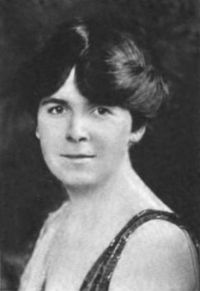
Margaret Culkin Banning

Margaret Culkin Banning

Summary

Portrait of Margaret Culkin Banning Margaret Culkin Banning,  This marrying (1920)

“ It was not an embrace and yet Horatia felt it as one, and was not as she usually was while she danced—aware of only music and rhythm; now she was aware of Anthony. There was a response in her unexpected to herself. She gave herself up to his leadership and this assumption of control. All the instincts which for generations have encouraged women to lean on men awoke in her and for those few moments she knew the joy which women have always had and will always have in being cared for, in having decisions made for them and their wills bent to the desires of others. ”
Source: Gutenberg

Portrait of Margaret Culkin Banning Margaret Culkin Banning,  This marrying (1920)

“ But that was the end of our love. We wanted to see each other in little new bodies and we wanted to make a home for the babies and to give them everything good and lovely. Because we loved each other. If we hadn’t happened to meet each other we might have gone on forever without finding the right thing. I think there is a right thing, you know, a thing for everyone. Some people are born to be perpetually esthetic and some to keep the great tide of emotion flowing strong through the world—and some are meant to see babies and some to be good mental companions. ”
Source: Gutenberg

Portrait of Margaret Culkin Banning Margaret Culkin Banning,  This marrying (1920)

“ There that dangerous touch of feminine dogmatism absorbed at Maud’s came into play. She was asking him to give up a meaningless relationship, to trust in her judgment, to fulfill her desire. If he would not sacrifice a thing which was worthless, if he would not trust her judgment, if he would not fulfill her desire, either he had not been honest in telling of the whole relationship between him and Rose Hubbell or he was a lover whose love was only skin deep. To such a preposterous pitch of unconscious arrogance had her feelings brought her. Those were sad days for Horatia. ”
Source: Gutenberg

Get perspective with Kwize: daily news enlightened by great literature