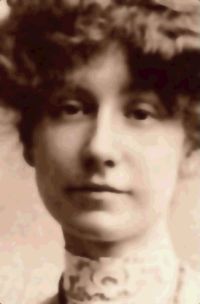
Marjorie Bowen

Marjorie Bowen

Summary

Portrait of Marjorie Bowen Marjorie Bowen The Seven Deadly Sins (Bowen)… (1913–14)

Now she, being a gracious lady and seeing Rieke working at her door, stopped her sledge and entered the hut and spoke kindly to the girl about the wedding drawing so near.
And as she stood talking in the warm room, she put back her mantle, and Rieke saw the white gown, pure as the snow, with white fur on the bodice, buckled with rough pearls; and she heeded nothing of what the lady said, but thought only of the white gown; and when she had gone, tinkle, tinkle with her reindeer over the snow, Rieke sat down and wept.
Source: Wikisource

Portrait of Marjorie Bowen Marjorie Bowen The Seven Deadly Sins (Bowen)… (1913–14)

And there lay Helva, smiling, on the clean sheets, and on her feet were the shoes.
Now Rieke began to envy the dead.
“What are the shoes to her?” she thought. “She does not need them in her grave; if she had been alive she would have given them to me, and it is foolish for these shoes to be lost in the corruption of the earth-when I need them.”
Source: Wikisource

Portrait of Marjorie Bowen Marjorie Bowen The Seven Deadly Sins (Bowen)… (1913–14)

And Envy is cowardly, and dare not openly show its face, but murmurs and grumbles and complains and detracts privately; and these secret mutterings of Envy are termed the Devil’s Pater Noster, though the Devil never had a Pater Noster, but lewd folk so call this sour whispering of Envy.
And from Envy come rancour, and grudging, and bitterness of heart, and discord, and false witness, and malignity.
And it is the most difficult sin of all to fight, for it goes generally cloaked in the semblance of some virtue.
Source: Wikisource

Get perspective with Kwize: daily news enlightened by great literature