Summary

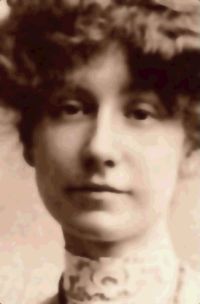
Portrait of Marjorie Bowen Marjorie Bowen The Viper of Milan — 28. The Viper (1906)

Valentine tried to speak; the words died away on her tongue; she fell back against the tapestry, grasping it in stiff fingers, her eyes on his face.
Visconti seated himself at the table on which the page had stood the glass, and, resting his face on his hands, looked at her. The Viper on his doublet seemed to writhe, alive.
"Graziosa is dead," he said.
Valentine's eyes grew wild with fear.
"I did not kill her!" she cried. "I did not kill her, Gian!"
"I found her dead," said Visconti, still looking at her.
Valentine writhed against the wall, wringing her hands. "She slew herself," she moaned.
Source: Wikisource

Portrait of Marjorie Bowen Marjorie Bowen The Viper of Milan — 28. The Viper (1906)

Visconti turned away. "She is not likely to forget, it seems," he thought. "Her spirit will not trouble my path more."
Neither his nor anyone's. The brilliant, witty, and daring Valentine Visconti was to dare, to mock, to laugh no more; her high spirit was broken, her proud courage gone. From that fearful night she was timorous, shrinking, like a child, wandering and vacant—like Tisio, half-crazed.
Source: Wikisource

Portrait of Marjorie Bowen Marjorie Bowen The Viper of Milan — 28. The Viper (1906)

Since Valentine's cruel stab, Graziosa had faded, grown silent and dull; and her beauty had gone with her happiness. She looked no wife for a Visconti. Torn from its setting, her fresh face lost its charm; the simplicity that had pleased him in her father's house annoyed the Duke in his own palace; the meekness and devotion that had flattered his vanity now angered it—in his eyes she had no more presence than a serving-maid; she was making his choice a mock before all Milan, with her white face and timid voice.
Source: Wikisource

Get perspective with Kwize: daily news enlightened by great literature