Summary

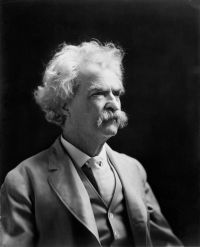
Portrait of Mark Twain Mark Twain In Defence of Harriet Shelley

No, there is no way of finding out what Harriet's state of feeling was during the month that Shelley was disporting himself in the Bracknell paradise. We have to fall back upon conjecture, as our fabulist does when he has nothing more substantial to work with. Then we easily conjecture that as the days dragged by Harriet's heart grew heavier and heavier under its two burdens—shame and resentment: the shame of being pointed at and gossiped about as a deserted wife, and resentment against the woman who had beguiled her husband from her and now kept him in a disreputable captivity.
Source: Gutenberg

Portrait of Mark Twain Mark Twain In Defence of Harriet Shelley

We have inspected the six reasons which we are asked to believe drove a man of conspicuous patience, honor, justice, fairness, kindliness, and iron firmness, resolution, and steadfastness, from the wife whom he loved and who loved him, to a refuge in the mephitic paradise of Bracknell. These are six infinitely little reasons; but there were six colossal ones, and these the counsel for the destruction of Harriet Shelley persists in not considering very important.
Source: Gutenberg

Portrait of Mark Twain Mark Twain In Defence of Harriet Shelley

Having proved that a crime is not a crime, was it worth while to go on and fasten the responsibility of a crime which was not a crime upon somebody else? What is the use of hunting down and holding to bitter account people who are responsible for other people's innocent acts?
Still, the fabulist thinks it a good idea to do that. In his view Shelley's first wife, Harriet, free of all offense as far as we have historical facts for guidance, must be held unforgivably responsible for her husband's innocent act in deserting her and taking up with another woman.
Source: Gutenberg

Get perspective with Kwize: daily news enlightened by great literature