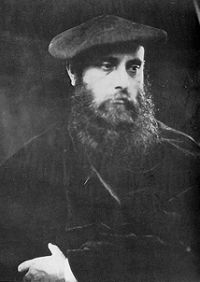
William Michael Rossetti

William Michael Rossetti

Summary

Portrait of William Michael Rossetti William Michael Rossetti 1911 Encyclopædia Britannica, Volume 24… (1911)

In his own dayan alien in the world of mind and invention, and in our day but partially a denizen of it, he appears destined to become, in the long vista of years, an informing presence in the innermost shrine of human thought. Shelley appeared at the time when the sublime frenzies of the French revolutionary movement had exhausted the elasticity of men's thought—at least in England—and had left them flaccid and stolid; but that movement prepared another in which revolution was to assume the milder guise of reform, conquering and to conquer.
Source: Wikisource

Portrait of William Michael Rossetti William Michael Rossetti 1911 Encyclopædia Britannica, Volume 24… (1911)

Shelley was its prophet. As an iconoclast and an idealist he took the only position in which a poet could advantageously work as a reformer. To outrage his contemporaries was the condition of leading his successors to triumph and of personally triumphing in their victories. Shelley had the temper of an innovator and a martyr; and in an intellect wondrously poetical he united speculative keenness and humanitarian zeal in a degree for which we might vainly seek his precursor. We have already named ideality as one of his leading excellences.
Source: Wikisource

Portrait of William Michael Rossetti William Michael Rossetti 1911 Encyclopædia Britannica, Volume 24… (1911)

Shelley was a shy, sensitive, mopish sort of boy from one point of view—from another a very unruly one, having his own notions of justice, independence and mental freedom; by nature gentle, kindly and retiring—under provocation dangerously violent. He resisted the odious fagging system, exerted himself little in the routine of school-learning, and was known both as “Mad Shelley” and as “Shelley the Atheist.” Some writers try to show that an Eton boy would be termed atheist without exhibiting any propensity to atheism, but solely on the ground of his being mutinous.
Source: Wikisource

Get perspective with Kwize: daily news enlightened by great literature