Summary

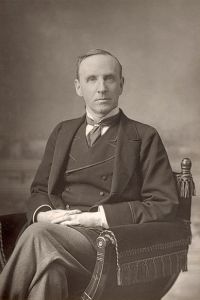
Portrait of John Morley John Morley Critical Miscellanies, Vol. 1, Essay 3…

We feel that we are watching clouds sweep majestically across the sky, and, even when they are darkest, blue interspaces are not far off. Contrast the moodiest parts of Childe Harold or of Cain with Novalis's Night Hymns. Byron's gloom is a mere elegance in comparison. The one pipes to us with a graceful despondency on the edge of the gulf, while the other carries us actually down into the black profound, with no rebellious cry, nor shriek of woe, but sombrely awaiting the deliverance of death, with soul absorbed and consumed by weariness.
Source: Gutenberg

Portrait of John Morley John Morley Critical Miscellanies, Vol. 1, Essay 3…

And this is precisely the temper and the spirit of Byron. Nowhere else do we see drawn in such traits that colossal figure, which has haunted Europe these fourscore years and more, with its new-born passion, its half-controlled will, its constant cry for a multitude of unknown blessings under the single name of Freedom, the one known and unadulterated word of blessing. If only Truth, which alone of words is essentially divine and sacrosanct, had been the chief talisman of the Revolution, the movement would have been very different from that which we know.
Source: Gutenberg

Portrait of John Morley John Morley Critical Miscellanies, Vol. 1, Essay 3…

They are alive with an exalted and magnanimous generosity, the one high virtue which can never fail to touch a multitude. Subtlety may miss them, graces may miss them, and reason may fly over their heads, but the words of a generous humanity on the lips of poet or chief have never failed to kindle divine music in their breasts. The critic may censure, and culture may wave a disdainful hand. As has been said, all such words 'are open to criticism, and they are all above it.' The magic still works. A mysterious and potent word from the gods has gone abroad over the face of the earth.
Source: Gutenberg

Get perspective with Kwize: daily news enlightened by great literature