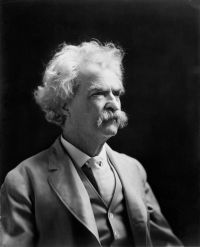
Mark Twain

Mark Twain

Summary

Portrait of Mark Twain Mark Twain My Platonic Sweetheart (1912)

This glimpse of her carries me back to Maui, and that time when I saw her gasp out her young life. That was a terrible thing to me at the time. It was preternaturally vivid; and the pain and the grief and the misery of it to me transcended many sufferings that I have known in waking life. For everything in a dream is more deep and strong and sharp and real than is ever its pale imitation in the unreal life which is ours when we go about awake and clothed with our artificial selves in this vague and dull-tinted artificial world.
Source: Wikisource

Portrait of Mark Twain Mark Twain My Platonic Sweetheart (1912)

We often experience this strange and gracious thing in our dream-loves; and we remember it as a feature of our childhood-loves, too.
We strolled along, across the bridge and down the road, chatting like the oldest friends. She called me George, and that seemed natural and right, though it was not my name; and I called her Alice, and she did not correct me, though without doubt it was not her name. Everything that happened seemed just natural and to be expected. Once I said, "What a dear little hand it is!" and without any words she laid it gracefully in mine for me to examine it.
Source: Wikisource

Portrait of Mark Twain Mark Twain My Platonic Sweetheart (1912)

When I think of that house and its belongings, I recognize what a master in taste and drawing and color and arrangement is the dream-artist who resides in us. In my waking hours, when the inferior artist in me is in command, I cannot draw even the simplest picture with a pencil, nor do anything with a brush and colors; I cannot bring before my mind's eye the detail image of any building known to me except my own house at home
Source: Wikisource

Get perspective with Kwize: daily news enlightened by great literature