Summary

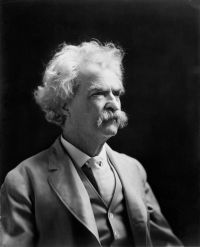
Portrait of Mark Twain Mark Twain Pudd'nhead Wilson — Driscoll Spares His Slaves (1894)

On frosty nights the humane Negro prowler would warm the end of the plank and put it up under the cold claws of chickens roosting in a tree; a drowsy hen would step on to the comfortable board, softly clucking her gratitude, and the prowler would dump her into his bag, and later into his stomach, perfectly sure that in taking this trifle from the man who daily robbed him of an inestimable treasure —his liberty —he was not committing any sin that God would remember against him in the Last Great Day.
Source: Wikisource

Portrait of Mark Twain Mark Twain Pudd'nhead Wilson — Driscoll Spares His Slaves (1894)

Wilson stepped to the window to observe the combatants; he could not work while their chatter continued. Over in the vacant lots was Jasper, young, coal black, and of magnificent build, sitting on a wheelbarrow in the pelting sun —at work, supposably, whereas he was in fact only preparing for it by taking an hour's rest before beginning. In front of Wilson's porch stood Roxy, with a local handmade baby wagon, in which sat her two charges —one at each end and facing each other. From Roxy's manner of speech, a stranger would have expected her to be black, but she was not.
Source: Wikisource

Portrait of Mark Twain Mark Twain Pudd'nhead Wilson — Driscoll Spares His Slaves (1894)

Wilson knew Roxy by sight, and when the duel of wits begun to play out, he stepped outside to gather in a record or two. Jasper went to work energetically, at once, perceiving that his leisure was observed. Wilson inspected the children and asked:
"How old are they, Roxy?"
"Bofe de same age, sir —five months. Bawn de fust o' Feb'uary."
"They're handsome little chaps. One's just as handsome as the other, too."
Source: Wikisource

Get perspective with Kwize: daily news enlightened by great literature