Summary

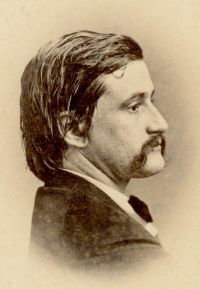
Portrait of Q. K. Philander Doesticks Q. K. Philander Doesticks What Became of the Slaves on a Georgia Plantation…

Some of them regarded the sale with perfect indifference, never making a motion, save to turn from one side to the other at the word of the dapper Mr. Bryan, that all the crowd might have a fair view of their proportions, and then, when the sale was accomplished, stepped down from the block without caring to cast even a look at the buyer, who now held all their happiness in his hands. Others, again, strained their eyes with eager glances from one buyer to another as the bidding went on, trying with earnest attention to follow the rapid voice of the auctioneer.
Source: Gutenberg

Portrait of Q. K. Philander Doesticks Q. K. Philander Doesticks What Became of the Slaves on a Georgia Plantation…

Sometimes, two persons only would be bidding for the same chattel, all the others having resigned the contest, and then the poor creature on the block, conceiving an instantaneous preference for one of the buyers over the other, would regard the rivalry with the intensest interest, the expression of his face changing with every bid, settling into a half smile of joy if the favorite buyer persevered unto the end and secured the property, and settling down into a look of hopeless despair if the other won the victory.
Source: Gutenberg

Portrait of Q. K. Philander Doesticks Q. K. Philander Doesticks What Became of the Slaves on a Georgia Plantation…

Do they not naturally become one great family, each man a brother unto each?
It is true they were sold "in families;" but let us see: a man and his wife were called a "family," their parents and kindred were not taken into account; the man and wife might be sold to the pine woods of North Carolina, their brothers and sisters be scattered through the cotton fields of Alabama and the rice swamps of Louisiana, while the parents might be left on the old plantation to wear out their weary lives in heavy grief, and lay their heads in far-off graves, over which their children might never weep.
Source: Gutenberg

Get perspective with Kwize: daily news enlightened by great literature