Summary

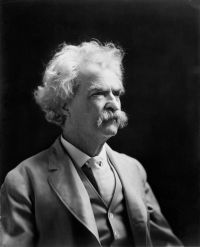
Portrait of Mark Twain Mark Twain Roughing It — Chapter VIII (1872)

In a second or two it becomes a horse and rider, rising and falling, rising and falling—sweeping toward us nearer and nearer—growing more and more distinct, more and more sharply defined—nearer and still nearer, and the flutter of the hoofs comes faintly to the ear—another instant a whoop and a hurrah from our upper deck, a wave of the rider's hand, but no reply, and man and horse burst past our excited faces, and go winging away like a belated fragment of a storm!
Source: Wikisource

Portrait of Mark Twain Mark Twain Roughing It — Chapter VIII (1872)

The pony-rider was usually a little bit of a man, brimful of spirit and endurance. No matter what time of the day or night his watch came on, and no matter whether it was winter or summer, raining, snowing, hailing, or sleeting, or whether his "beat" was a level straight road or a crazy trail over mountain crags and precipices, or whether it led through peaceful regions or regions that swarmed with hostile Indians, he must be always ready to leap into the saddle and be off like the wind! There was no idling-time for a pony-rider on duty.
Source: Wikisource

Portrait of Mark Twain Mark Twain Roughing It — Chapter VIII (1872)

So sudden is it all, and so like a flash of unreal fancy, that but for the flake of white foam left quivering and perishing on a mail-sack after the vision had flashed by and disappeared, we might have doubted whether we had seen any actual horse and man at all, maybe.
Source: Wikisource

Get perspective with Kwize: daily news enlightened by great literature