Summary

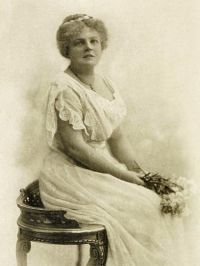
Portrait of Mary Gaunt Mary Gaunt The Moving Finger — Dick Stanesby's Hutkeeper (1895)

And when they arrived at what had been Dick Stanesby's hut, an out-station of Nilpe Nilpe, there was nothing to mark it from the surrounding plain but a handful of ashes; even the hard earth showed no sign of trampling feet.
Stanesby flung himself off his horse like a madman.
"She may be all right. She must be all right. It may have been an accident. She is hidden down by the creek."
Turner said nothing. What could he say? His thoughts flew back to the lonely hut, and the girl lying there on the hard ground in her dusky red dress, alone, cast off, a thing of use to no one.
Source: Wikisource

Portrait of Mary Gaunt Mary Gaunt The Moving Finger — Dick Stanesby's Hutkeeper (1895)

There was another thing too, a fair-haired, blue-eyed girl, as different—as different as the North Pole from the Equator—each had loved her, to each she had been the embodiment of all earthly virtues, and each thought of her as well, too—the one man bitterly. Why should this man, this whilom friend of his, have everything? And the other man read his thoughts, and unreasoning anger grew up in his heart against his old chum. It has nothing whatever to do with Dick Stanesby's hutkeeper, of course, nothing whatever
Source: Wikisource

Portrait of Mary Gaunt Mary Gaunt The Moving Finger — Dick Stanesby's Hutkeeper (1895)

He would go into the head-station with him to-morrow morning, he very much doubted if he would come back. He would intend to at first, but it would be very much easier to stay, and he would stay, and the girl—what would become of her? He found himself saying it over and over again to himself, what would become of her? What could become of her? till he fell into an uneasy doze and dreamed that he was master of Heyington and had married Gladys Rowan, who was no other than Dick Stanesby's hutkeeper, and crouched in the corner with a long, shining knife in her hand.
Source: Wikisource

Get perspective with Kwize: daily news enlightened by great literature