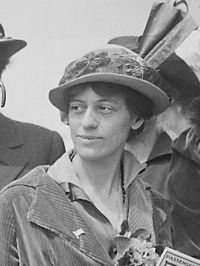
Mary Heaton Vorse

Mary Heaton Vorse

Summary

Portrait of Mary Heaton Vorse Mary Heaton Vorse The Sinistrées of France (1917)

There is not a single little family on the remote border of France whose eyes are not fixed on that long, narrow strip of blood-stained country, that tormented and tortured country of barb-wire, of mitrailleuses, of shell, of great guns and trenches. The state of soul of a nation which has subordinated the fruitful industries of life to the subject of killing and being killed is a strange thing. The spirit of a nation which sees its young manhood and its youth surge up to the country of death and then ebb back wounded and dead is strange and grave
Source: Wikisource

Portrait of Mary Heaton Vorse Mary Heaton Vorse The Sinistrées of France (1917)

War, which had welded the men of the country into an engine of destruction, had sent its women forth on countless works of mercy and reconstruction, and this work I had come to France to witness. As I went about on this strange and heartbreaking sight-seeing, as I visited barracks in which not wounded soldiers, but wounded families, lived and ate, saw workshops, hospitals, there came to me a vision of what a total disorganization war meant to the civil population.
Source: Wikisource

Portrait of Mary Heaton Vorse Mary Heaton Vorse The Sinistrées of France (1917)

The people of these regions have lost everything: their houses are burned; their animals, even the rabbits, are gone; their farm implements are shapeless pieces of grotesquely melted iron. They live in temporary, patched shelters and in the houses built by the Society of Friends, or mass themselves in some nearby village that escaped destruction at the hands of the crown prince's retreating army. After a time in this silent country one gets the sense that destruction is normal, and tears start to one's eyes at the sight of an undestroyed French village smiling in the sun.
Source: Wikisource

Get perspective with Kwize: daily news enlightened by great literature