Summary

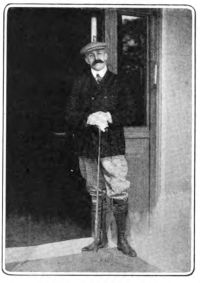
Portrait of Max Pemberton Max Pemberton Queen of the Jesters — The Purple Glass (1897)

Every room on the upper story shed bright golden rays from its windows. Seen in the strong moonlight, the great house had become like a palace of the fairies. The panes of glass were so many stars shining in a setting of black stone; the very attics were beacons to guide those far away in the valley. More than all, a man clothed from head to foot in black stood plain to be seen at a casement above the salon; and he it was who called to Count Charles,—
“Monsieur le Comte, Monsieur le Comte, where is your brother Eugène?”
Source: Wikisource

Portrait of Max Pemberton Max Pemberton Queen of the Jesters — The Purple Glass (1897)

The Count of Brives, who had waited for the moment, rose for the first time since his brother had drunk the wine. Eugène, lying there in the trance which the poison put upon him, could observe all the other's actions—and he watched him as a prisoner may watch a captor from whom he has no hope of mercy. Deliberately and with all the nerve of a man grown callous to crime, the count began to finish his work. He put out the lights upon the table one by one, until a single candle alone lighted the vast chamber.
Source: Wikisource

Portrait of Max Pemberton Max Pemberton Queen of the Jesters — The Purple Glass (1897)

As for Eugène, he had felt the strength of the arms which clasped him so surely; and now when he lay stiff and voiceless upon the grass, he said that death had become his neighbour. “He means to throw my body in the Seine,” he thought; “they will come too late—they have left me to die—what cruelty!—what a night of suffering!” Had a voice then been given to him, he would have screamed in his terror. But the drug had tied his tongue; the trance held him too surely—he was dead, yet suffered as the living rarely have suffered.
Source: Wikisource

Get perspective with Kwize: daily news enlightened by great literature