Summary

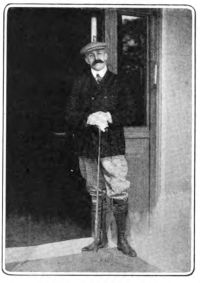
Portrait of Max Pemberton Max Pemberton Signors of the Night — Golden Ashes (1899)

Franza cast himself upon his knees.
"I ask it," he cried, cringing in the very dirt of the pavement. "I ask it of Giovanni, the lord of Venice."
"Whom you denounced this morning, and compelled to take a vow of silence! How shall he pardon you when he may not speak of you to anyone until another day has dawned and set? It is not to be, signore. Prepare for death, for you have not a minute of life!"
He raised his hand, and other figures emerged from the darkness. Men, dressed in red and masked as the executioner was, seized the wretched gold-maker and dragged him from the ground.
Source: Wikisource

Portrait of Max Pemberton Max Pemberton Signors of the Night — Golden Ashes (1899)

Franza drew back from the apparition step by step. He covered his eyes to shut it out; he tried to speak, but could not articulate his words. He knew that the end of his life had come; but to die there, in that cellar, to die with no prayer upon his lips, to know that his head would roll upon that slime-dewed floor—it was a fear of death surpassing all imagination.
"I cannot die," he moaned, "I cannot die here—in this place."
"Not so," said the other, "you should have asked mercy of him who is the voice of Venice, signore."
Source: Wikisource

Portrait of Max Pemberton Max Pemberton Signors of the Night — Golden Ashes (1899)

The shadow vanished as it had come, swiftly, inexplicably. Yet the presence of another in the room was no longer to be doubted. The alchemist could hear a sound of breathing, even a footstep in the darkness near him. An assassin was his guest, he thought; a robber had come to his house, carried there by the wild stories that Venice told of the man who had promised her gold. No other theory was possible. And it was a theory which made good his broken courage. The terror of the unseen could bring sweat to his forehead
Source: Wikisource

Get perspective with Kwize: daily news enlightened by great literature