Summary

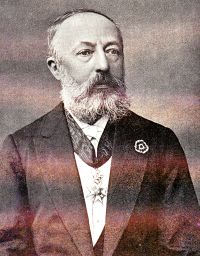
Portrait of Michael Jan de Goeje Michael Jan de Goeje Encyclopædia Britannica, Ninth Edition…

The appearance of the Prophet with the great changes that ensued, the conquests that made the Arabs—till then a despised race—lords of half the civilized world, supplied a vast store of new matter for relations which men were never weary of hearing and recounting. They wished to know everything about the apostle of God, whose influence on his own time was so enormous, who had accomplished all that seemed impossible and had inspired the Arabs with a courage and confidence that made them stronger than the legions of Byzantium and Ctesiphon.
Source: Wikisource

Portrait of Michael Jan de Goeje Michael Jan de Goeje Encyclopædia Britannica, Ninth Edition…

In this case the writer recurs to the first method, already described, only when the different traditions are greatly at variance with one another. In yet a third type of history the old method is entirely forsaken and we have a continuous narrative only occasionally interrupted by citation of the authority for some particular point. But the principle still is that what has been well said once need not be told again in other words. The writer therefore keeps as close as he can to the letter of his sources, so that quite a late writer often reproduces the very words of the first narrator.
Source: Wikisource

Portrait of Michael Jan de Goeje Michael Jan de Goeje Encyclopædia Britannica, Ninth Edition…

Genealogy, which often called for elucidations, led on to history. Beládhorí's excellent Ansáb al-Ashráf (Genealogies of the Nobles) is a history of the Arabs on a genealogical plan.
The oldest extant history is the biography of the Prophet by Ibn Isḥák (d. 150) [2] . This work is generally trustworthy. Mohammed's life before he appeared as a prophet and the story of his ancestors are indeed mixed with many fables illustrated by spurious verses.
Source: Wikisource

Get perspective with Kwize: daily news enlightened by great literature