Summary

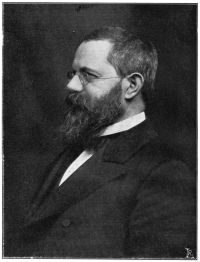
Portrait of Moses Gaster Moses Gaster 1911 Encyclopædia Britannica, Volume 4… (1911)

Taking as our starting-point the teaching of the heretical sects in Russia, notably those of the 14th century, which are a direct continuation of the doctrines held by the Bogomils, we find that they denied the divine birth of Christ, the personal coexistence of the Son with the Father and Holy Ghost, and the validity of sacraments and ceremonies. The miracles performed by Jesus were interpreted in a spiritual sense, not as real material occurrences; the Church was the interior spiritual church in which all held equal share. Baptism was only to be practised on grown men and women.
Source: Wikisource

Portrait of Moses Gaster Moses Gaster 1911 Encyclopædia Britannica, Volume 4… (1911)

This world being the work of Satan, the perfect must eschew any and every excess of its pleasure. But the Bogomils did not go as far as to recommend asceticism. They held the “Lord’s Prayer” in high respect as the most potent weapon against Satan, and had a number of conjurations against “evil spirits.” Each community had its own twelve “apostles,” and women could be raised to the rank of “elect.” The Bogomils wore garments like mendicant friars and were known as keen missionaries, travelling far and wide to propagate their doctrines.
Source: Wikisource

Portrait of Moses Gaster Moses Gaster 1911 Encyclopædia Britannica, Volume 4… (1911)

Concerning the Bogomils something can be gathered from the information collected by Euthymius Zygadenus in the 12th century, and from the polemic Against the Heretics written in Slavonic by St Kozma during the 10th century. The old Slavonic lists of forbidden books of the 15th and 16th centuries also give us a clue to the discovery of this heretical literature and of the means the Bogomils employed to carry on their propaganda. Much may also be learnt from the doctrines of the numerous heretical sects which arose in Russia after the 11th century.
Source: Wikisource

Get perspective with Kwize: daily news enlightened by great literature