“ Why should Nelly want to go so soon? The beauty and luxury of the cottage—the mere tea-table with all its perfect appointments of fine silver and china, the multitude of cakes, the hot-house fruit, the well-trained butler—all the signs of wealth that to Nelly were rather intimidating, and to Sarratt—in war-time—incongruous and repellent, were to Bridget the satisfaction of so many starved desires. This ease and lavishness; the best of everything and no trouble to get it; the 'cottage' as perfect as the palace;—it was so, she felt, that life should be lived, to be really worth living. ”
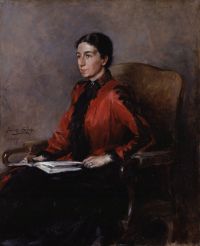
Mrs. Humphry Ward
Summary
"Missing," by Mrs. Humphry Ward, is a novel set during wartime, focusing on Nelly Sarratt, a nurse navigating the contrast between rural peace and urban strife. The narrative unfolds in the English fells and a lakeside cottage, contrasting Farrell’s lavish estate with the austerity of war service.
Themes of class difference, personal sacrifice, and emotional tension emerge through Nelly’s reflective journey, her complex relationship with Bridget, and Farrell’s commitment to his hospital. The novel’s emphasis on human endurance and moral complexity reflects Ward’s nuanced portrayal of societal and personal upheaval.
Quotes from Missing (Mrs. Humphry Ward)
“ Nelly Sarratt stood lost in the beauty of the spectacle commanded by Sir William Farrell's cottage. It was placed in a by-road on the western side of Loughrigg, that smallest of real mountains, beloved of poets and wanderers. The ground dropped sharply below it to a small lake or tarn, its green banks fringed with wood, while on the further side the purple crag and noble head of Wetherlam rose out of sunlit mist,—thereby indefinitely heightened—into a pearl and azure sky. To the north also, a splendid wilderness of fells, near and far; with the Pikes and Bowfell leading the host. ”
“ Yet when Sir William and Cicely arrived, to find Bridget making tea, and Nelly listening with a little frown of effort, while Marsworth, pencil in hand, was drawing diagrams à la Belloc, to explain to her the Russian retreat from Galicia, how impossible not to feel cheered by Farrell's talk and company! The great bon enfant, towering in the little room, and positively lighting it up by the red-gold of his-hair and beard, so easily entertained, so overflowing with kind intentions, so fastidious intellectually, and so indulgent morally:—as soon as he appeared he filled the scene. ”
