Summary

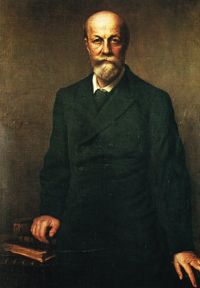
Portrait of Mór Jókai Mór Jókai Manasseh: A Romance of Transylvania

But Manasseh did not strike down this person, for it was a woman,—Zenobia. A dirk and a brace of pistols were stuck in her belt.
"Take care!" she cried to Manasseh, and she made as if to shield him from view with her cloak. "Stay where you are!"
But Manasseh seized her by the wrist and shouted hoarsely in her ear:
"Where are my wife and sister?"
Zenobia understood his tone and the frenzy with which he grasped her arm. With a sad smile she made answer:
"Calm yourself. They are well cared for. They are at home in their own house, where no one can harm them."
Source: Gutenberg

Portrait of Mór Jókai Mór Jókai Manasseh: A Romance of Transylvania

Art it is, moreover, that makes woman the equal of man. The woman artist is something more than man's other half; she is complete in herself. She does not ask the world for a living, she does not beg any man to give her his name, she kneels before no marriage-altar for the priest's blessing; she goes forth and wins for herself all that she desires.
An irresistible impulse drove Blanka to ascend to the painter's lofty perch in order to see how he was succeeding in the task which she herself knew not even how to begin.
Source: Gutenberg

Portrait of Mór Jókai Mór Jókai Manasseh: A Romance of Transylvania

It was a new world to Blanka,—that busy mining community, where clouds of black smoke from the tall chimneys of the smelting works and iron foundries met the eye in every direction, and the cheerful hum of toil constantly saluted the ear.
The Adorjan family gave the newcomer a most hearty welcome. With Anna, Manasseh's twin sister, the girl whom Benjamin Vajdar had so cruelly wronged, Blanka felt already acquainted. They embraced without waiting for an introduction, and when they drew back to scan each other's faces, they could hardly see for the tears that filled their eyes.
Source: Gutenberg

Get perspective with Kwize: daily news enlightened by great literature