Summary

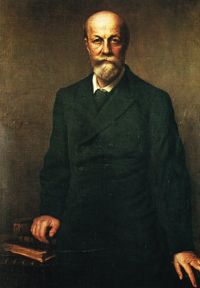
Portrait of Mór Jókai Mór Jókai The Slaves of the Padishah

Canst thou die for him whom thou lovest?"
"It would be rapture to me."
"Canst thou die for her whom thou hatest in order to prove how thou dost love?"
"I do not understand," said Azrael hesitating.
"Thou wilt understand immediately. There is a captive woman in Hassan's castle who is entrusted to thy charge. This captive woman must be liberated. Wilt thou liberate her?"
At these words Azrael's heart began to throb feverishly. All the blood vanished from her face. She looked at the youth in despair, and said with a gasp:
"Dost thou love this woman?"
Source: Gutenberg

Portrait of Mór Jókai Mór Jókai The Slaves of the Padishah

All at once the youth felt the contact of a burning hand upon his arm. Broken in mind and body, the odalisk dragged herself to his knees, and seizing his hand drew it to her breast and to her lips. She could not speak, she could only sob and weep.
Feriz looked at her compassionately.
"Thou hast done well," he said gently.
The girl embraced the youth's knees, and it was well with her that he suffered her to do so.
"I thank thee for keeping thy word," said Feriz; "look now! that woman was not my beloved. She has a husband who loves her."
Indescribably sweet were these words to the damsel.
Source: Gutenberg

Portrait of Mór Jókai Mór Jókai The Slaves of the Padishah

Teleki, upon whom the eyes of the Princess had flashed fiercely during the speech, as if accepting the challenge, answered in a cold, stony voice:
"Here, madam, we dispense justice only, not mercy or honour."
"Justice!" exclaimed Anna. "What! If a husband has offended, is his innocent wife, whose only fault is that she loves the fugitive, is she, I say, to suffer punishment in his stead? Where is the justice of that?"
"Justice is often another name for necessity."
"Then who are all ye whom I see here? Are ye the chief men of Transylvania or Turkish slaves?
Source: Gutenberg

Get perspective with Kwize: daily news enlightened by great literature