“ But Michal fell upon Valentine's neck and stammered:"With thee by my side, I'll go forth into the wild forest and face cold and tempest. With thee I'll brave death, yea, damnation itself. I crave no other death than the death by which thou diest. I desire no other eternity, be it bliss or woe, than the eternity which unites our soul in one, my angel, my king, my sun!"And Simplex thrust his trumpet through the window and sounded a wedding march, which awoke the echoes in the neighboring hills. ”
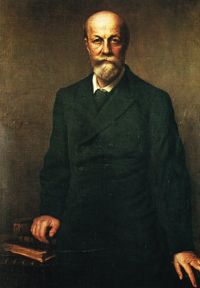
Mór Jókai
Summary
Mór Jókai’s Pretty Michal is a 19th-century Hungarian novel centered on the turbulent romance between Michal and Valentine Kalondai, set against a backdrop of rural superstition and social conflict. Themes of love, sacrifice, and moral defiance intertwine as Michal struggles with her father’s authoritarian rule and the conflict between spiritual obligation and earthly longing.
The narrative, rich in folkloric elements and dramatic tension, examines the consequences of challenging tradition through vivid characters like the rebellious sheriff, the vengeful sorceress, and the tormented butcher. Jókai’s tale ultimately highlights the delicate balance between personal passion and the rigid frameworks of community and belief.
Quotes from Pretty Michal (Mór Jókai)
“ If I had wished you to join the ranks of the saints as a martyr, I should have left you in the house of the headsman of Zeb, shouldn't I? Do you suppose that I do not know how to value your beautiful white velvety skin, your large sparkling eyes, your round cheeks, your inviting lips, your fine figure? All the noble opals in the mines of Dubink are not half as numerous as the precious stones which will be laid at your feet whenever you like. Your fingers will turn whatever they touch to gold. If you only do what I tell you, you'll be richer than King Darius. ”
“ She was tortured by the thought that her father had forgotten her; but what agonized her still more was the reflection that her lover was thinking of her even now, knowing nothing of her misery, fancying her happy, and cursing and adoring her at the same time.Then there came to her those evil thoughts which are far more terrible than all the pale specters of the tomb and the scaffold—doubt in a heavenly Providence, rebellion against human morality and human justice. The custom which gave a father a right to dispose of the destiny of his child revolted her. ”
