Summary

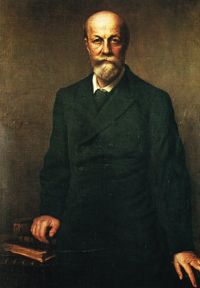
Portrait of Mór Jókai Mór Jókai Told by the Death's Head: A Romantic Tale

The maid knelt in the grass at my feet, bent meekly forward, and parted her beautiful hair at the back of her snowy neck, so that I might the more easily strike the fatal blow.
But I didn't do anything of the sort!
Instead, I flung the sword at the feet of the leader and cried:
"Go to perdition, you red devil! You may devour me alive—I won't harm a hair of this pretty child's head."
"Ho-ho," bellowed the red one, "you have betrayed yourself, my lad! Were you a peasant you would cut off the girl's head rather than lose your own. You are a noble—you would rather die yourself than harm a woman.
Source: Gutenberg

Portrait of Mór Jókai Mór Jókai Told by the Death's Head: A Romantic Tale

I now stood face to face with the dreaded moo-calf. It was not a creation of the imagination, but a veritable monster, and a most hideous and frightful one too, at that! It had four huge legs and feet like an elephant; a neck two fathoms long, at the end of it an enormous head with horns; the long red tongue hanging from the open jaws was covered with scales shaped like saw teeth.
"You may be the devil himself," I cried, drawing my sword, and stepping up to the monster, "but you must give me back my purse."
Source: Gutenberg

Portrait of Mór Jókai Mór Jókai Told by the Death's Head: A Romantic Tale

At last we arrived over Mount Ararat. I knew where I was, by the tongues of flame which encircled the mount like a wreath. They were the altars of the fire-worshipping Parsees—the source of Baku's eternal fires; and Danesh was one of the great spirits of the flame-adoring heathen. On the summit of Mount Ararat was a magnificent palace—to describe its splendors is impossible to the human tongue! Its walls were covered with the names of those persons who have been happy, and have thanked God therefor. The letters in which the names are written are so radiant, they make night as light as day.
Source: Gutenberg

Get perspective with Kwize: daily news enlightened by great literature