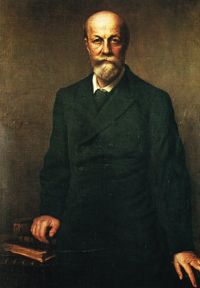
Mór Jókai

Mór Jókai

Summary

Portrait of Mór Jókai Mór Jókai Stories by Foreign Authors (1898)

Whatever may have happened, Czar Peter was buried, and the Czarina Katharine now saw that her late husband belonged to those dead who do not sleep quietly. They rise—rise from their graves—stretch out their hands from their shrouds, and touch with them those who have forgotten them. They turn over in their last resting-place, and the whole earth seems to tremble under the feet of those who walk above them!
Source: Wikisource

Portrait of Mór Jókai Mór Jókai Stories by Foreign Authors (1898)

Only one leader had the courage to pursue Pugasceff even into this land—this was Michelson. Just as the Siberian wolf who has tasted the blood of the wild boar does not swerve from the track, but pursues him even amongst reeds and morasses, so the daring leader chased his opponent from plain to plain. He never had more than 1,000 men, cavalry, artillery, and gunners, all told.
Source: Wikisource

Portrait of Mór Jókai Mór Jókai Stories by Foreign Authors (1898)

Russian society, both high and low, flower and root, met in Jelagin's castle, and while there enjoyed equality in the widest sense of the word. Strange phenomenon! That this should take place in Russia, where so much is thought of aristocratic rank, official garb, and exterior pomp; where an inferior is bound to dismount from his horse upon meeting a superior, where sub-officers take off their coats in token of salute when they meet those of higher rank, and where generals kiss the priest's hands and the highest aristocrats fall on their faces before the Czar!
Source: Wikisource

Get perspective with Kwize: daily news enlightened by great literature