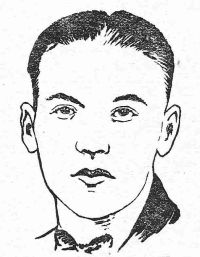
Neil R. Jones

Neil R. Jones

Summary

Portrait of Neil R. Jones Neil R. Jones,  Doomsday on Ajiat (1942)

“ Their mad fall was checked but slightly, and they realized their doom, for in the hundred miles or more left them, there was no possible chance of braking their speed to a safe maximum even with the increasing density of the atmosphere to help them.
It was in the professor's mind that a few of them might survive the crash—but to what purpose? What would there be left for a few machine men on a giant world with an irreparably wrecked spaceship and dead companions? Mechanically crippled, they would await the coming of the nova with the end it would bring.
”
Source: Gutenberg

Portrait of Neil R. Jones Neil R. Jones,  Doomsday on Ajiat (1942)

“ Still the rocket satellite pursued its lonely way, a cosmic coffin. Fiery, scintillating stars formed Professor Jameson's funeral cortege. Millions of years went by. Mankind was replaced by other forms of life which in turn knew their day only to disappear. Earth's atmosphere became rare.
Forty million years after the day when his rocket had been hurled off the face of the earth, Professor Jameson's body still lay perfectly preserved.
”
Source: Gutenberg

Portrait of Neil R. Jones Neil R. Jones,  Doomsday on Ajiat (1942)

“ Those in the background were lost in a gray fog which had crept among them since the machine men had risen in their balloon.
Hundreds of the great birds could be seen darting and wheeling above the mountainside. As the balloon was carried nearer by the rising wind, they spread on the wing and flapped about the strange invader, voicing their weird cries and veering menacingly about the metal globe and basket.
”
Source: Gutenberg

Get perspective with Kwize: daily news enlightened by great literature