Summary

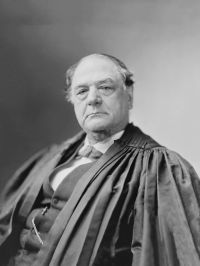
Portrait of Noah Haynes Swayne Noah Haynes Swayne Foster v. Goddard — Opinion of the Court

Goddard was not restricted from other business is, that he was thereby bound still further, if possible, to preserve, with the most scrupulous exactness and good faith, the two businesses entirely distinct, marked and unconflicting, so that there should be neither temptation nor opportunity, after having procured a vessel on one account, to subsequently change its destination, according as the adventure promised a profit or a loss. Whatever Goddard did under this agreement was at the common risk, and for the common benefit.
Source: Wikisource

Portrait of Noah Haynes Swayne Noah Haynes Swayne Foster v. Goddard — Opinion of the Court

These are cross appeals of the same cause in equity. Foster is the complainant, and Goddard the respondent. The record is voluminous. The questions presented for our consideration are questions of fact. No legal question arises in the case, with the exception of a single point touching the form and effect of exceptions to a master's report. The case involves nothing else that can be of interest in any other case.
Source: Wikisource

Portrait of Noah Haynes Swayne Noah Haynes Swayne Foster v. Goddard — Opinion of the Court

All the requirements of the contract as to Foster's services were the consideration of Goddard's agreement as to Foster's compensation. After the 1st of January, 1851, Foster could not, as an honest man, without the consent of Alsop & Co., (which is not shown,) have 'any interest out of the establishment.' According to the notice given by Foster, and accepted by Goddard, the contract between them was to terminate on the 31st of December, 1850. The complainant's bill avers that it did then terminate.
Source: Wikisource

Get perspective with Kwize: daily news enlightened by great literature