Summary

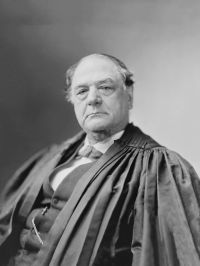
Portrait of Noah Haynes Swayne Noah Haynes Swayne Hauenstein v. Lynham — Opinion of the Court

A treaty cannot be the supreme law of the land, that is, of all the United States, if any act of a State legislature can stand in its way. If the Constitution of a State (which is the fundamental law of the State and paramount to its legislature) must give way to a treaty and fall before it, can it be questioned whether the less power, an act of the State legislature, must not be prostrate?
Source: Wikisource

Portrait of Noah Haynes Swayne Noah Haynes Swayne Hauenstein v. Lynham — Opinion of the Court

It is the declared will of the people of the United States that every treaty made by the authority of the United States shall be superior to the Constitution and laws of any individual State, and their will alone is to decide. If a law of a State contrary to a treaty is not void, but voidable only, by a repeal or nullification by a State legislature, this certain consequence follows,-that the will of a small part of the United States may control or defeat the will of the whole.' Ware v.
Source: Wikisource

Portrait of Noah Haynes Swayne Noah Haynes Swayne Hauenstein v. Lynham — Opinion of the Court

The Procrustean uniformity prescribed by the former treaty was thus abandoned, and it is fair to presume that the harmonious results in this respect which must necessarily follow, everywhere within the territory covered by the treaty, both at home and abroad, were the considerations by which those who made the change were animated. If a State or canton had a law which imposed a limitation in this class of cases, nothing more was necessary. If it had not such a law, it was competent to enact one, and until one exists there can be no bar arising from the lapse of time.
Source: Wikisource

Get perspective with Kwize: daily news enlightened by great literature