Summary

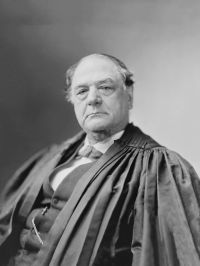
Portrait of Noah Haynes Swayne Noah Haynes Swayne Home Life Insurance Company v. Dunn…

The third article of the Constitution declares that the judicial power of the United States shall be vested in one Supreme Court and in such inferior courts as Congress may from time to time establish, and that it shall extend, among other things, to 'controversies' 'between citizens of different States.' As regards the inferior courts authorized to be established, Congress may give them such jurisdiction, both original and appellate, within the limits of the Constitution, as it may see fit to confer.
Source: Wikisource

Portrait of Noah Haynes Swayne Noah Haynes Swayne Home Life Insurance Company v. Dunn…

To say that there can be two final judgments upon the same pleadings, in the same cause, in the same court, and for exactly the same things, as the results of two successive trials, involves a solecism. If the first judgment was not final the first trial could not have been so. When the demand for a new trial was made, and the requisite bond was given and approved, the case stood upon the docket in all respects as if a new trial had been granted for some error or defect in the former trial, irrespective of the laws in question, and as if no previous trial had taken place.
Source: Wikisource

Portrait of Noah Haynes Swayne Noah Haynes Swayne Home Life Insurance Company v. Dunn…

In the act of Congress of 1866, [6] the language used in this connection is, 'at any time before the trial or final hearing.' If the difference in the act of 1867 be material, it is fair to presume that the change was deliberately made to obviate doubts that might possibly have arisen under the former act and to make the latter more comprehensive.
The fact that, under our construction, a case which has made progress, however far, if it has not passed the final trial, is liable to be removed, has little weight as an adverse argument.
Source: Wikisource

Get perspective with Kwize: daily news enlightened by great literature