Summary

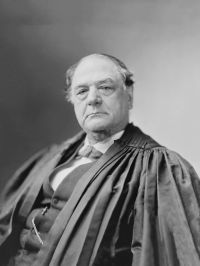
Portrait of Noah Haynes Swayne Noah Haynes Swayne Mattingly v. Nye — Opinion of the Court

There are several features in the complainant's testimony which impress us unfavorably, but it is not necessary to dwell upon them. Nor is it material to consider the facts relating to the last assignment. We are entirely satisfied that the orders of November 2d, 1853, were taken by the complainant upon the terms stated by Nye and White. There was, therefore, no indebtedness by Nye to the complainant when the trust deed was executed to Harkness, nor subsequently, until the assignment of July 21st, 1860, was given, if there were before the rendition of the judgment.
Source: Wikisource

Portrait of Noah Haynes Swayne Noah Haynes Swayne Mattingly v. Nye — Opinion of the Court

On the 10th of June, 1863, the complainant recovered a judgment at law against the defendant, J. W. Nye, for $2450, with interest from the 21st of July, 1860, until paid, and costs; a fi. fa. was issued and returned nulla bona. The defendent has no property liable to execution. On the 25th of June, 1857, Nye bought and paid for the property described in the bill. It was conveyed by deed of that date to the defendant, Harkness, in trust for Mary Nye, the wife of J. W. Nye, and her children.
Source: Wikisource

Portrait of Noah Haynes Swayne Noah Haynes Swayne Mattingly v. Nye — Opinion of the Court

The statute of 13 Eliz., ch. 5, is in force in the county of Washington, but it does not affect a conveyance like this as to subsequent creditors, unless fraud was intended when it was made. (Sexton v. Wheaton, 8 Wheation, 239; S.C.. 1 American Leading Cases, 1.) The whole learning of the law upon this subject is so fully developed in the note to this case in the work last mentioned, that it would be a waste of time to do more than refer to it.
Source: Wikisource

Get perspective with Kwize: daily news enlightened by great literature