Summary

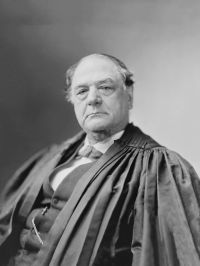
Portrait of Noah Haynes Swayne Noah Haynes Swayne,  Morgan v. Beloit City and Town…

“ But this court has wisely abrogated that rule, and by its twenty-first rule in equity, provides that 'the prayer of the bill shall ask the special relief to which the plaintiff supposes himself entitled, and also shall contain a prayer for general relief.'
On merits, the case is not good. Though equity is liberal in the adaptation of her remedies, she does not give a remedy to every party merely because he is in difficulty, nor unless his difficulty be covered by some specific ground of equitable jurisdiction.
”
Source: Wikisource

Portrait of Noah Haynes Swayne Noah Haynes Swayne,  Morgan v. Beloit City and Town…

“ The only question before us is, whether there is a remedy in equity. It may be, as suggested by the counsel for the appellant, that an action would lie upon the statute. It is also possible that a proper case for a writ of mandamus might be made. But these inquiries are only material as bearing upon the question whether there is an adequate remedy at law. If so, a suit in equity cannot be maintained. ”
Source: Wikisource

Portrait of Noah Haynes Swayne Noah Haynes Swayne,  Morgan v. Beloit City and Town…

“ The remedy at law is, therefore, neither plain nor adequate.
The question, whether a bill in equity will lie, is disembarrassed of this objection.
The authority to tax for the payment of municipal liabilities, in cases like this, is in the nature of a trust. [5] The jurisdiction on a court of equity to interfere in all cases involving such an ingredient, is too clear to require any citation of authorities. It rests upon an elementary principle of equity jurisprudence.
”
Source: Wikisource

Get perspective with Kwize: daily news enlightened by great literature