Summary

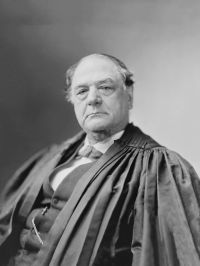
Portrait of Noah Haynes Swayne Noah Haynes Swayne Olcott v. Bynum — Opinion of the Court

But if this deed were rejected there is abundant proof by parol that Stephenson and Olcott were entitled to the beneficial interest in the property, by their purchase in the name of Hovey, and their payment of part of and securing of the balance of the consideration. The well-known doctrine of equity applies, 'that if one purchase an estate for another with the money of the latter, a trust results to the latter.' And, as to Stephenson's share, the plaintiff produces the deed of Stephenson, releasing all his right in the premises to himself.
Source: Wikisource

Portrait of Noah Haynes Swayne Noah Haynes Swayne Olcott v. Bynum — Opinion of the Court

Now, no chancellor would have ordered a sale of this vast property for cash when only an instalment of $13,000 was due. Sloan admits that the property would have sold better on a credit, and in that case might have been enhanced in price by dividing it into lots.
So a sale of the property in solido in that state of the mortgage debt was a great wrong to the plaintiff. It may well be questioned whether a sale by a sheriff, under similar circumstances, would not have been void. If the property can be separated, and exceeds the debt, no more ought to be sold than will pay the debt.
Source: Wikisource

Portrait of Noah Haynes Swayne Noah Haynes Swayne Olcott v. Bynum — Opinion of the Court

A trustee has no right to receive money before it is due, much less to raise it by sale. It is further apparent from the continued action of Bynum and Grier, as trustees, with no other evidence of title except the deed of January 1st, 1859, that they were the purchasers at that sale. Had Sloan purchased for the company, he or they should have been invested with title, and the trustees denuded.
Source: Wikisource

Get perspective with Kwize: daily news enlightened by great literature