Summary

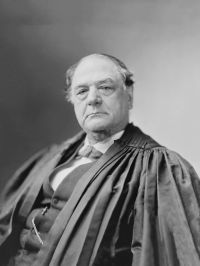
Portrait of Noah Haynes Swayne Noah Haynes Swayne Ryan v. Railroad Company — Opinion of the Court

In the former case, the lands covered by the false Mexican claim were situated within the limits of the territory where the right of the company attached to the designated odd sections granted when the road was located and the requisite maps were made. At that time the claim was in litigation, and sub judice. The court held that under these circumstances the premises were not 'public land,' within the meaning of the law, and could not become such until the title of the government was vindicated by the defeat of the claim, and that the patent issued to the railroad company was, therefore, void.
Source: Wikisource

Portrait of Noah Haynes Swayne Noah Haynes Swayne Ryan v. Railroad Company — Opinion of the Court

There is no controversy about the facts.
By the act of Congress of July 25, 1866, Congress granted certain lands to the California and Oregon Railroad Company. The appellee claims under that grantee, and has succeeded to its rights. At the date of the act there was pending a claim for the confirmation of a Mexican grant, which embraced within its boundaries the premises in controversy between these parties. The appellant insists that he has a paramount title, not under, but by reason of this claim, as will hereafter appear.
Source: Wikisource

Portrait of Noah Haynes Swayne Noah Haynes Swayne Ryan v. Railroad Company — Opinion of the Court

It was taken to held satisfy the grant to the extent that the odd sections originally given failed to meet its requirements. When so selected there was no Mexican or other claim impending over it. It had ceased to be sub judice, and was no longer in litigation. It was as much 'public land' as any other part of the national domain. The patent gave the same title to the appellee that a like patent for any other public land would have given to any other party. The Mexican claim when condemned lost its vitality.
Source: Wikisource

Get perspective with Kwize: daily news enlightened by great literature