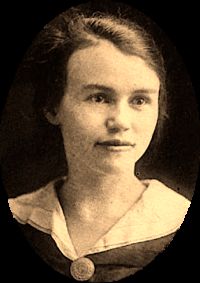
Nora Connolly O'Brien

Nora Connolly O'Brien

Summary

Portrait of Nora Connolly O'Brien Nora Connolly O'Brien The Irish rebellion of 1916 (1918)

Nearer to me were the famous Belfast shipyards, all alive with the clangor of hammering. As we approached I could see the swarms of men, poised on derricks and cranes, hard at work on the skeletons of ships. Just before we docked Captain Mellowes came on deck and walked over to the rail where I was standing. There was some byplay of surprised recognition between us for the benefit of those standing around. I asked him to come to the house for breakfast, and told him that he could not get a train to Dublin before ten o'clock. It was then seven o'clock and the gangplank was being put in place.
Source: Gutenberg

Portrait of Nora Connolly O'Brien Nora Connolly O'Brien The Irish rebellion of 1916 (1918)

And we cannot do so, for, as a nation Ireland has never recognized England as her conqueror, but as her antagonist, as an enemy that must be fought. And this attitude has succeeded in keeping the soul of Ireland alive and free.
For the conquest of a nation is never complete till its soul submits, and the submission of the soul of a nation to the conqueror makes its slavery and subjection more sure. But the soul of Ireland has never submitted.
Source: Gutenberg

Portrait of Nora Connolly O'Brien Nora Connolly O'Brien The Irish rebellion of 1916 (1918)

MacNeill, although friendly with, and because of the Irish Volunteers in continual contact with, the revolutionary members, was not a member of the Revolutionary Organization. He was not of the type to which revolutionists belong. His mind was of the academic order which must weigh all things, consider well all actions, and count the cost. A true revolutionist must never count the cost, for he knows that a revolution always repays itself, though it cost blood, and through it life be lost and sacrifice made.
Source: Gutenberg

Get perspective with Kwize: daily news enlightened by great literature