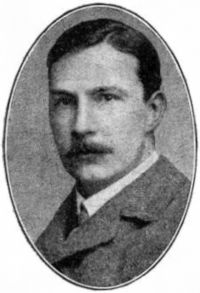
Oliver Onions

Oliver Onions

Summary

Portrait of Oliver Onions Oliver Onions Millington: Sculptor (1906)

A little clock ticked loudly and hurriedly, and, as if with its quick monotonous beat, Millington’s brain too began to work. He tried to tell himself that it was not much, the shape that a man could fashion out of clay, the line he could draw with a pencil, the word that issued from his mouth; and he knew that he lied. In themselves these were nothing; but they were all a man had to show for his years of experience and agony and sweat. These truly were the man—brains, blood, and soul. Perry’s Bambinos and Sorrows were Perry, his own foolish bust was himself
Source: Wikisource

Portrait of Oliver Onions Oliver Onions Millington: Sculptor (1906)

He looked again at the clay bust of Nurse Hemsley, and recognised it fairly for what it was—pathetically feeble. And even in looking, hope tantalised him again. Miss Hemsley’s hair flowed on one side, like a boy’s, but that of the bust he had left unmodelled, for fear of Perry’s recognition, Perhaps with the fashioning of the hair all else would fall into order and truth; and then, even in its birth, the hope vanished again. He knew that it would do no such thing. He, a reliable worker within the strict convention of the Gothic, was a fool outside it.
Source: Wikisource

Portrait of Oliver Onions Oliver Onions Millington: Sculptor (1906)

The day grew hot, and the lichens in the courtyard became parched and shrivelled. Perry came in, announced that he intended to spend the afternoon on the river, and went out again. The old women and crippled children of the Hospital came out, and then retired as the heat became intense. From far over the meadows came the whirring of a reaper and the faint regular clash of a machine-rake; and at last Millington drew the blinds of the studio, swathed the bust in wet clouts, and dozed in his chair.
Source: Wikisource

Get perspective with Kwize: daily news enlightened by great literature