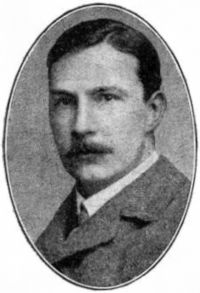
Oliver Onions

Oliver Onions

Summary

Portrait of Oliver Onions Oliver Onions Widdershins — Phantas (1911)

Bligh, of course, would have had his explanation: it was the Hand of God. That sufficed for Bligh, who had gone forward the evening before, and whom Abel Keeling now seemed vaguely and as at a distance to remember as the deep-voiced fanatic who had sung his hymns as, man by man, he had committed the bodies of the ship's company to the deep. Bligh was that sort of man; accepted things without question; was content to take things as they were and be ready with the fenders when the wall of rock rose out of the opalescent mists.
Source: Wikisource

Portrait of Oliver Onions Oliver Onions Widdershins — Phantas (1911)

Before the Mary of the Tower had existed she had been a shape in some man's imagination; before that, some dreamer had dreamed the form of a ship with oars; and before that, far away in the dawn and infancy of the world, some seer had seen in a vision the raft before man had ventured to push out over the water on his two planks. And since this shape that rode before Abel Keeling's eyes was a shape in his, Abel Keeling's dream, he, Abel Keeling, was the master of it. His own brooding brain had contrived her, and she was launched upon the illimitable ocean of his own mind....
Source: Wikisource

Portrait of Oliver Onions Oliver Onions Widdershins — Phantas (1911)

But as a dreamer, even in his dream, will scratch upon the wall by his couch some key or word to put him in mind of his vision on the morrow when it has left him, so Abel Keeling found himself seeking some sign to be a proof to those to whom no vision is vouchsafed. Even Bligh sought that—could not be silent in his bliss, but lay on the deck there, uttering great passionate Amens and praising his Maker, as he said, upon an harp and an instrument of ten strings.
Source: Wikisource

Get perspective with Kwize: daily news enlightened by great literature