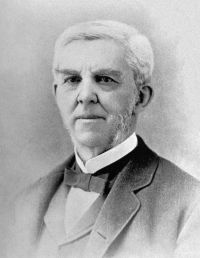
Oliver Wendell Holmes Sr.

Oliver Wendell Holmes Sr.

Summary

Portrait of Oliver Wendell Holmes Sr. Oliver Wendell Holmes Sr. Elsie Venner — Chapter XVIII (1891)

We wonder, therefore, when we find a soul which was born to a full sense of individual liberty, an unchallenged right of self-determination on every new alleged truth offered to its intelligence, voluntarily surrendering any portion of its liberty to a spiritual dictatorship which always proves to rest, in the last analysis, on a majority vote, nothing more nor less, commonly an old one, passed in those barbarous times when men cursed and murdered each other for differences of opinion, and of course were not in a condition to settle the beliefs of a comparatively civilized community.
Source: Wikisource

Portrait of Oliver Wendell Holmes Sr. Oliver Wendell Holmes Sr. Elsie Venner — Chapter XVIII (1891)

If a man has a genuine, sincere, hearty wish to get rid of his liberty, if he is really bent upon becoming a slave, nothing can stop him. And the temptation is to some natures a very great one. Liberty is often a heavy burden on a man. It involves that necessity for perpetual choice which is the kind of labor men have always dreaded. In common life we shirk it by forming habits, which take the place of self-determination. In politics party-organization saves us the pains of much thinking before deciding how to cast our vote.
Source: Wikisource

Portrait of Oliver Wendell Holmes Sr. Oliver Wendell Holmes Sr. Elsie Venner — Chapter XVIII (1891)

So it is that in all the quiet bays which indent the shores of the great ocean of thought, at every sinking wharf, we see moored the hulks and the razees of enslaved or half-enslaved intelligences. They rock peacefully as children in their cradles on the subdued swell which comes feebly in over the bar at the harbor's mouth, slowly crusting with barnacles, pulling at their iron cables as if they really wanted to be free
Source: Wikisource

Get perspective with Kwize: daily news enlightened by great literature