Summary

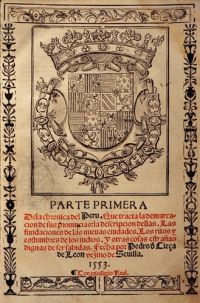
Portrait of Pedro de Cieza de León Pedro de Cieza de León The travels of Pedro de Cieza de Léon…

In the great square of Cuzco was the stone of war, in the shape of a sugar loaf, well enclosed, and full of gold. The king came forth, with his councillors and favourites, to a place where the chiefs of provinces were assembled, to learn from them who were most valiant among their people, and best fitted to be leaders and captains. One Indian had charge of ten men, another received authority over fifty, another over a hundred, another over five hundred, another over a thousand, another over five thousand, and another over ten thousand.
Source: Gutenberg

Portrait of Pedro de Cieza de León Pedro de Cieza de León The travels of Pedro de Cieza de Léon…

This was the order that was taken to prevent the great events of the empire from passing into oblivion. When a king died, if he had been valiant and a good ruler, without having lost any province inherited from his father, nor been guilty of mean or paltry actions, it was permitted and ordained that songs in his honour should be composed, in which he should be praised in such wise as that all the people should be astonished to hear of deeds so mighty.
Source: Gutenberg

Portrait of Pedro de Cieza de León Pedro de Cieza de León The travels of Pedro de Cieza de Léon…

Accordingly the grandest road was constructed that there is in the world, as well as the longest, for it extended from Cuzco to Quito, and was connected with that from Cuzco to Chile. I believe that, since the history of man has been recorded, there has been no account of such grandeur as is to be seen in this road, which passes over deep valleys and lofty mountains, by snowy heights, over falls of water, through live rocks, and along the edges of furious torrents.
Source: Gutenberg

Get perspective with Kwize: daily news enlightened by great literature