Summary

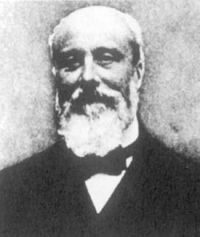
Portrait of Pierre Duhem Pierre Duhem The Origins of Statics — Preface

The study of the origins of Statics has conducted us thus to a conclusion; in proportion as we have pushed our historical researches earlier and in directions more varied, this conclusion has imposed itself to our spirit with an increasing force; also we dared to formulate it in its full generality: the mechanical and physical science of which we are well within our rights proud in modern times flows, by an uninterrupted series of scarcely sensible improvements, from the doctrines professed in the heart of the schools of the Middle Ages
Source: Wikisource

Portrait of Pierre Duhem Pierre Duhem The Origins of Statics — Preface

The idea of which the first germ was found in the treatise of Jordanus had grown, following a continuous development, through the writings of the disciples of Jordanus, of Leonardo da Vinci, of Cardan, of Roberval, of Descartes, of Wallis, to attain its form achieved in the letter of Jean Bernoulli to Varignon, in the Analytical Mechanics of Lagrange, in the work of Willard Gibbs. The Science of which we are today so legitimately proud derived, by an evolution which has been given to us to mark the gradual phases, from the Science which was born about the year 1200.
Source: Wikisource

Portrait of Pierre Duhem Pierre Duhem The Origins of Statics — Preface

It is not at all solely by the doctrines of the School of Jordanus that the Mechanics of the Middle Ages has contributed to the formation of modern Mechanics. In the middle of the XIVth century, one of the doctors who was bringing the most honor to the brilliant nominalist School of the Sorbonne, Albert of Saxony, inaugurated a theory of the center of gravity which was obliging to have the greatest credit and the most durable influence.
Source: Wikisource

Get perspective with Kwize: daily news enlightened by great literature