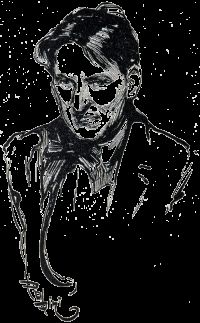
Piet Vlag

Piet Vlag

The Masses (1911)

Summary

Portrait of Piet Vlag Piet Vlag,  The Masses (1911)

“ TRUE co-operation means a collective effort to secure the greatest good for the greatest number. The measure of its efficiency, therefore, may be measured by the number of people benefitted by its operation. The greater the number the greater its efficiency.
For example, when 100 shoemakers form an organization to produce collectively, they eliminate the profit which otherwise goes to the manufacturer. One hundred people are benefitted by this form of co-operation. Despite its small number, such an organization is still entitled to be called a co-operative.
”
Source: Wikisource

Portrait of Piet Vlag Piet Vlag,  The Masses (1911)

“ For example, the co-operative movement in Germany, known as the Schultze Delitz movement, was essentially paternalistic, and although it was backed by a large capital the co-operative movement did not gain impetus in Germany until the working people took a hand in it. When they began to invest their savings in the co-operatives instead of in the banks, and did things for themselves instead of having them done for them, the co-operative movement began to grow. ”
Source: Wikisource

Portrait of Piet Vlag Piet Vlag,  The Masses (1911)

“ A member of a co-operative store who owns 100 shares receives 100 times the amount of dividends that the man receives who owns only one share. The co-operatives argue justly that the woman who bought $200 worth did twice as much toward the making of the profit as the woman who bought only $100 worth. They therefore decided that this woman is entitled to twice the amount of profit. This form of co-operation is about the best we know of. ”
Source: Wikisource

Get perspective with Kwize: daily news enlightened by great literature