Summary

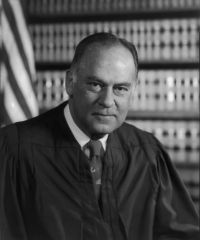
Portrait of Potter Stewart Potter Stewart Gutknecht v. United States — Concurrence

Those provisions seek to induce Selective Service registrants to satisfy their legal obligations by presenting them with the alternative prospect of induction into the armed forces. The personal appearance and appeal are critical stages in the delinquency process. They enable the registrant declared delinquent by his local board to contest the factual premises on which the delinquency declaration rests, to correct his oversight if the breach of duty has arisen merely from neglect, or to purge himself of his delinquency if his violation has been wilful.
Source: Wikisource

Portrait of Potter Stewart Potter Stewart Gutknecht v. United States — Concurrence

Such an interpretation of the delinquency regulations comports with the view of the agency charged with their administration-that their purpose is to provide young men for the armed services, not the penitentiaries. [3] It comports, as well, with the regulatory scheme itself, under which the local board may reopen its classification of a delinquent registrant without regard to the usual restrictions against such action, [4] and remove the registrant from delinquency status at any time, even after it has ordered him to report for induction.
Source: Wikisource

Portrait of Potter Stewart Potter Stewart Gutknecht v. United States — Concurrence

Accordingly, even though the regulations seem to say that such reopening and removal lie within the discretion of the local board, [6] the Government agrees that the board would abuse its discretion if it refused such remedial relief to a registrant who breached his duty inadvertently or carelessly, or who sought to correct the breach, even if originally wilful, and to return to compliance with his obligations.
Source: Wikisource

Get perspective with Kwize: daily news enlightened by great literature