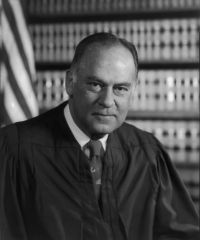
 Potter Stewart,
Katz v. United States (389 U.S. 347…
Potter Stewart,
Katz v. United States (389 U.S. 347…
“ No less than an individual in a business office, [10] in a friend's apartment, [11] or in a taxicab, [12] a person in a telephone booth may rely upon the protection of the Fourth Amendment. One who occupies it, shuts the door behind him, and pays the toll that permits him to place a call is surely entitled to assume that the words he utters into the mouthpiece will not be broadcast to the world. To read the Constitution more narrowly is to ignore the vital role that the public telephone has come to play in private communication. ”
