Summary

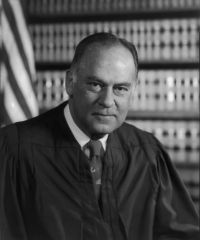
Portrait of Potter Stewart Potter Stewart United New York and New Jersey Sandy Hook Pilots Association v…

It is scarcely more helpful to indulge in the euphemism that the decedent was 'cleaning' part of the ship, and to say that it is a traditional duty of seamen to keep their ship clean. The basic fact is, in the apt words of Judge Lumbard's dissenting opinion in the Court of Appeals, that the decedent 'was not doing what any crew member had ever done on this ship or anywhere else in the world so far as we are informed.' 251 F.2d 708, at page 715. To extend liability for unseaworthiness to the decedent here would distort the law of Mahnich, of Hawn and of Sieracki beyond recognition.
Source: Wikisource

Portrait of Potter Stewart Potter Stewart United New York and New Jersey Sandy Hook Pilots Association v…

As to the claim based upon negligence, for which the New Jersey Wrongful Death Act clearly gives a right of action, [8] we agree with the Court of Appeals that 'the evidence created an issue that could be decided only by a verdict.' The defendants owed a duty of exercising reasonable care for the safety of the decedent. They were charged with knowledge that carbon tetrachloride was to be used in the confined spaces of the engine room.
Source: Wikisource

Portrait of Potter Stewart Potter Stewart United New York and New Jersey Sandy Hook Pilots Association v…

Hawn [5] made clear that the shipowner could not escape liability for unseaworthiness by delegating to others work traditionally done by members of the crew. Whether their calling be labeled 'stevedore,' 'carpenter,' or something else, those who did the 'type of work' traditionally done by seamen, and were thus related to the ship in the same way as seamen 'who had been or who were about to go on a voyage,' were entitled to a seaworthy ship.
Source: Wikisource

Get perspective with Kwize: daily news enlightened by great literature