Summary

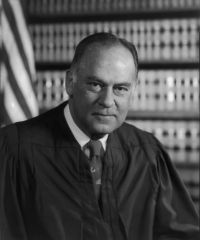
Portrait of Potter Stewart Potter Stewart United States v. Seckinger — Dissent

In drafting its construction contracts the United States certainly has both the power and the resources to write contracts providing expressly that it will pass off onto its contractors, either in whole or in part, liability it incurs for damages caused by its own judicially determined negligence. The Government could require its contractors to hold it harmless without regard to fault on their part, or it could establish a proration of liability arising from the joint negligence of the parties.
Source: Wikisource

Portrait of Potter Stewart Potter Stewart United States v. Seckinger — Dissent

To be sure, the Court does not go quite so far as to hold that this obscure clause operates as a complete liability insurance policy. But the Court does hold that the clause requires the contractor to indemnify the Government 'to the full extent that its negligence, if any contributed to the injuries to the employee.' The magnitude of the burden the Court imposes is well illustrated by the circumstances of this case.
Source: Wikisource

Portrait of Potter Stewart Potter Stewart United States v. Seckinger — Dissent

It no more says that the contractor shall reimburse the Government for his share of joint negligence than that shall be a liability insurer for the Government's sole negligence.
The Court nonetheless manages to discover that the clause amounts to a contribution agreement, relying for its conclusion upon cases involving, not the simple responsibility clause before us, but express indemnification agreements with 'hold harmless' clauses. [6] This result is said to be desirable because it ensures a fair distribution of loss between those jointly responsible for the damage.
Source: Wikisource

Get perspective with Kwize: daily news enlightened by great literature