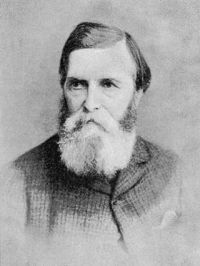
R. M. Ballantyne

R. M. Ballantyne

Summary

Portrait of R. M. Ballantyne R. M. Ballantyne The Settler and the Savage

Round these men and women group themselves very much as they do in ordinary society. Classes keep by themselves, not because one class wishes to exclude the other, but because habits, sympathies, interests, and circumstances draw like to like. The ruddy glare of the camp-fires contrasts pleasantly with the cold light of the moon, which casts into deepest shadow the wild recesses of bush and brake, inducing many a furtive glance from the more timid of the settlers, who see an elephant, a buffalo, or a Cape “tiger” in every bank and stump and stone.
Source: Gutenberg

Portrait of R. M. Ballantyne R. M. Ballantyne The Settler and the Savage

Halting when within about eighty yards, they fired a volley from horseback over the heads of the enemy. Then, through the smoke, they charged at full speed like thunderbolts, Groot Willem roaring like a mad buffalo-bull, Jerry Goldboy shrieking like a wounded elephant, and energising fearfully with legs, arms, reins, and blunderbuss, while the others shouted or laughed in wild excitement.
The Fetcani, as Sandy Black had prophesied, could not stand it. Turning their backs to the foe, they fled as only panic-stricken and naked niggers can fly, and were soon scattered and lost in the jungle.
Source: Gutenberg

Portrait of R. M. Ballantyne R. M. Ballantyne The Settler and the Savage

Through this rich display of plenty Considine dashed, and, on reaching the wall at the further end, found Conrad Marais with his wife and daughter, sons, servants, and slaves, engaged in furious conflict with—locusts!
The enemy had come on them suddenly and in force. The ground was alive with them. Armies, legions, were there—not full-grown flying locusts, but young ones, styled foot-gangers, in other words, crawlers, walkers, or hoppers,—and every soul in the establishment had turned out to fight.
Source: Gutenberg

Get perspective with Kwize: daily news enlightened by great literature