Summary

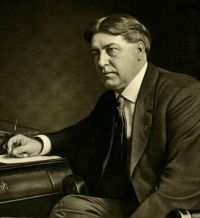
Portrait of Randall Parrish Randall Parrish Wolves of the Sea — XXVIII. A New Plan of Escape (1918)

I am going now to find Watkins, and you have promised to lie down and sleep."
"To lie down," she corrected, "but whether to sleep, I cannot tell."
I left her there, lying hidden and shapeless on the deck beneath the cover of the blanket, her head pillowed on the flags, and groped my own way forward, pausing a moment to gaze into the binnacle, and exchange a word with the man at the wheel. I found Watkins awake, seated on the forecastle steps, where I joined him, lighting my own pipe for companionship, our conversation gradually drifting toward the point I came to make.
Source: Wikisource

Portrait of Randall Parrish Randall Parrish Wolves of the Sea — XXVIII. A New Plan of Escape (1918)

They will never go willingly."
"There is an argument which will overcome their fear."
"You mean force?"
"No; although I doubt not that might suffice. I mean cupidity. Each sailor aboard has an interest in the salvage of this vessel under the English law. You tell me the schooner was a slaver, driven out to sea by storm immediately after discharging a cargo of slaves. There must be gold aboard—perhaps treasure also, for I cannot think a slaver above piracy if chance arose. Let the crew dream that dream, and you will need no whip to drive them into an English port."
Source: Wikisource

Portrait of Randall Parrish Randall Parrish Wolves of the Sea — XXVIII. A New Plan of Escape (1918)

The swift slaver made excellent progress in spite of light winds, and proved easy to handle. Watkins found enough to occupy the crew on deck and aloft, and they seemed contented, although I noticed the fellows gathered together in groups whenever idle, and discussed the situation earnestly. While they might not be entirely satisfied, and, no doubt, some fear lingered in their minds, the fellows lacked leadership for any revolt, and would remain quiet for the present at least.
Source: Wikisource

Get perspective with Kwize: daily news enlightened by great literature