Summary

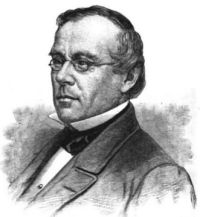
Portrait of Richard Frothingham Richard Frothingham The Command in the Battle of Bunker Hill

What would be thought of a general, who, in the heat of an action, should leave the field, and go half a mile after a reinforcement, and not get back until a retreat had commenced? Is it not at considerable hazard to General Putnam's reputation that, with such contemporary evidence to meet as there is in this case—the authenticity of which cannot be successfully impugned—the position is maintained that he was the immediate and responsible commander of this battle?
Source: Gutenberg

Portrait of Richard Frothingham Richard Frothingham The Command in the Battle of Bunker Hill

If it were so, if there were this implicit subjection, this ready obedience, the enemies of General Putnam might ask with force, what they have asked in weakness—'Why, if he was so obeyed, were not the troops at the lines? Could he not have led them up?' To affirm that he was obeyed implicitly, by officers and men, and then to be obliged to admit that those he commanded were not in battle raging a stone's throw off, is to place the brave old general in an awkward position, a position he never filled in his life time. Mr Swett's zeal here lacks discretion.
Source: Gutenberg

Portrait of Richard Frothingham Richard Frothingham The Command in the Battle of Bunker Hill

The Americans, with defences, soon to become so formidable, hardly commenced, for there were but slight defences on Cambridge road, and slighter still at Roxbury—with their inefficient organization—with their scanty supply of ammunition—were hardly in a condition to act either offensively or defensively; while the ten thousand veterans in Boston, supplied with every art of war, were in high discipline, arrogant in their confidence, and exasperated at the presumption of the "rebel" force in pretending to hold them in a state of siege.
Source: Gutenberg

Get perspective with Kwize: daily news enlightened by great literature