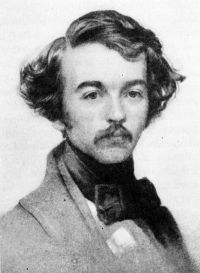
Richard Henry Stoddard

Richard Henry Stoddard

Summary

Portrait of Richard Henry Stoddard Richard Henry Stoddard Appletons' Cyclopædia of American Biography (1900)

Bryant's meditative poetry — the association of humanity with nature — a calm but sympathetic recognition of the ways of man and his presence on the earth. The power of suggestion and of rapid generalization, which was the key-note of “The Ages,” lived anew in every line of “The Prairies,” in which a series of poems present themselves to the imagination as a series of pictures in a gallery — pictures in which breadth and vigor of treatment and exquisite delicacy of detail are everywhere harmoniously blended and the unity of pure art is attained.
Source: Wikisource

Portrait of Richard Henry Stoddard Richard Henry Stoddard Appletons' Cyclopædia of American Biography (1900)

The juvenile poems of William Cullen Bryant are as clever as those of Chatterton, Pope, and Cowley; but they are in no sense original, and it would have been strange if they had been. There was no original writing in America at the time they were written; and if there had been, it would hardly have commended itself to the old-fashioned taste of Dr. Bryant, to whom Pope was still a power in poetry. It was natural, therefore, that he should offer his boy to the strait-laced muses of Queen Anne's time; that the precocious boy should lisp in heroic couplets
Source: Wikisource

Portrait of Richard Henry Stoddard Richard Henry Stoddard Appletons' Cyclopædia of American Biography (1900)

Bryant's poems are, perhaps, “The Land of Dreams,” “The Burial of Love,” “The May Sun sheds an Amber Light,” and “The Voice of Autumn”; and they were written in a succession of happy hours, and in the order named. Next to these pieces, as examples of pure poetry, should be placed “Sella” and “The Little People of the Snow,” which are exquisite fairy fantasies. The qualities by which Bryant's poetry are chiefly distinguished are serenity and gravity of thought; an intense, though repressed, recognition of the mortality of mankind; an ardent love for human freedom
Source: Wikisource

Get perspective with Kwize: daily news enlightened by great literature