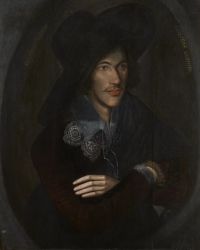
John Donne

John Donne

Summary

Portrait of John Donne John Donne Poems of John Donne (1896)

But for those who have experienced, or who at least understand, the ups-and-downs, the ins-and-outs of human temperament, the alternations not merely of passion and satiety, but of passion and laughter, of passion and melancholy reflection, of passion earthly enough and spiritual rapture almost heavenly, there is no poet and hardly any writer like Donne.
Source: Wikisource

Portrait of John Donne John Donne Poems of John Donne (1896)

The strange story whick Brantôme tells of Margaret of Navarre summoning a lover to the church under whose flags his mistress lay buried, and talking with him of her, shows, a generation before Donne’s birth, the influence which in his day had made its way across the narrow seas as it had earlier across the Alps, and had at each crossing gathered gloom and force if it had lost lightness and colour. Always in him are the two conflicting forces of intense enjoyment of the present, and intense feeling of the contrast of that present with the future.
Source: Wikisource

Portrait of John Donne John Donne Poems of John Donne (1896)

It is true that, as was said above, there are those, and many of them, who can never and will never like Donne. No one who thinks Don Quixote a merely funny book, no one who sees in Aristophanes a dirty-minded fellow with a knack of Greek versification, no one who thinks it impossible not to wish that Shakespeare had not written the Sonnets, no one who wonders what on earth Giordano Bruno meant by Gli eroici Furori, need trouble himself even to attempt to like Donne.
Source: Wikisource

Get perspective with Kwize: daily news enlightened by great literature